SEBI Data: 9 in 10 F&O Traders Still Lose Money
F&O trading losses remain severe, with SEBI data showing 9 in 10 retail traders lose money. Learn why risks persist and how to protect your capital.
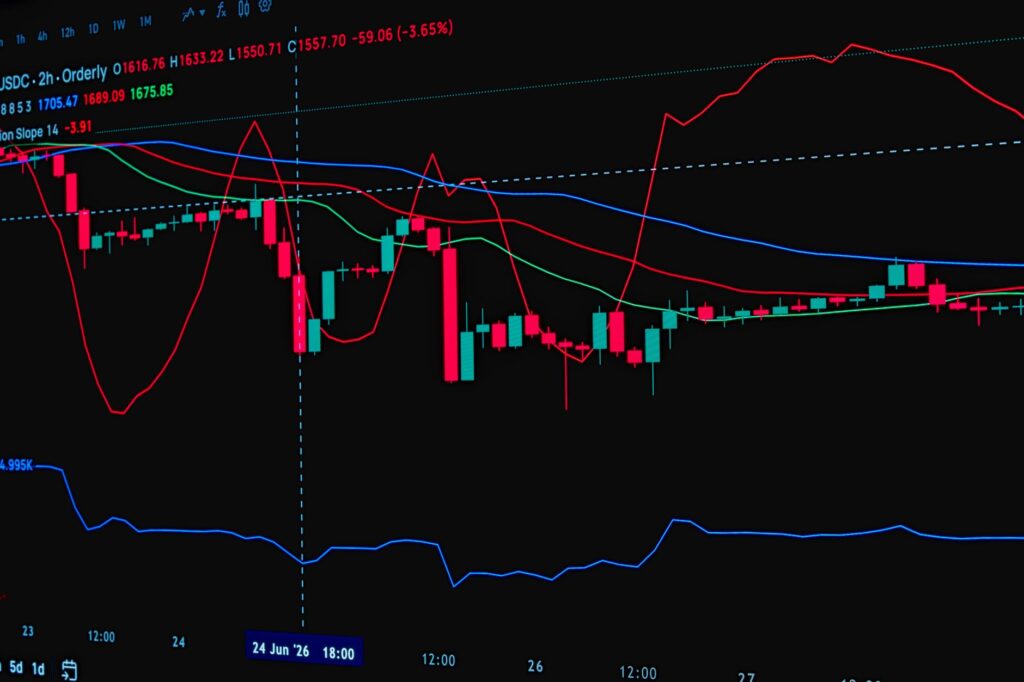
SEBI’s latest derivatives study shows that nine in 10 individual traders incur F&O trading losses, with average losses worsening even as participation declines. For Indian retail investors, the findings underline that futures and options can serve hedging needs but demand disciplined risk management, as leverage, time decay and pricing complexity can magnify mistakes.
SEBI‘s latest derivatives findings deliver a blunt warning: most individual participants in F&O trading continue to lose money, even as overall participation cools. The deeper concern is not merely how many traders lose, but that the average loss worsens among those who remain active-a sign that reduced participation has not fixed weak risk controls.
Table of Contents
- Why F&O Trading Attracts Investors Despite the Risks
- What the SEBI Study Says About F&O Trading
- What This Means for Indian Retail Investors
- What to Watch Next
- Expert Insight
- Frequently Asked Questions
- Key Takeaways
The central issue is clear: derivatives can be legitimate tools for hedging and risk transfer, but their structure makes casual participation particularly unforgiving.
Why F&O Trading Attracts Investors Despite the Risks
Futures and options offer something that ordinary cash-market investing does not: economic exposure without paying the full value of the underlying asset upfront. That feature can make derivatives efficient for hedgers, institutions and experienced traders. It can also magnify mistakes.
In the cash market, an investor generally pays for the shares purchased and can decide whether to hold through short-term volatility. Futures introduce mark-to-market obligations, while options add variables such as time decay, implied volatility and strike selection. Direction alone may not be enough. A trader can correctly anticipate a broad market move and still lose because the move arrives too late, is too small or is already reflected in the option premium.
That complexity is often hidden behind a simple trading interface. A contract can be bought or sold quickly, but the payoff depends on several interacting forces. This gap between ease of execution and difficulty of valuation is one reason F&O trading can feel more accessible than it really is.
The appeal also grows when headline indices rise. As of 2026-08-21, the Sensex stands at 77,537.72 after gaining 0.82% today, while the Nifty 50 is at 24,231.85, up 0.64%. A positive market session can encourage the belief that directional trading is straightforward. It is not.
An index rally does not guarantee that an options buyer profits. The chosen strike may remain out of the money, the premium may have been expensive, or time decay may offset part of the gain. An options seller, meanwhile, may earn small premiums repeatedly before one abrupt market move creates a much larger loss.
Why do traders stay despite those risks? The answer often combines several behavioural forces:
- Low upfront cash requirements can make large exposure appear affordable.
- Short holding periods create rapid feedback and repeated opportunities to trade.
- A few early wins can generate excessive confidence.
- Social-media discussions often highlight successful trades while ignoring losing accounts.
- Expiry-related activity can create the impression that profits are available every session.
- Traders may confuse a rising market with an easy trading environment.
- Losses can trigger attempts to recover money through larger or more frequent positions.
- Brokerage applications make order placement simple even when the product remains complex.
None of these factors proves that a participant will lose. They do, however, create an environment in which leverage, overconfidence and poor position sizing reinforce one another.
F&O products do not carry identical risks
The phrase “derivatives trading” covers instruments with very different payoff structures. Treating them as interchangeable can lead to serious errors.
| Instrument or position | Capital structure | Main risk | Common misunderstanding |
|---|---|---|---|
| Cash equity purchase | Investor pays for the shares | Market value can decline | A falling share may take a long time to recover |
| Futures position | Exposure is supported by margin | Adverse moves create mark-to-market obligations | Margin is not the maximum possible loss |
| Long call or put | Buyer pays an option premium | Premium can lose value or expire worthless | Correct direction does not always produce a profit |
| Short call or put | Seller receives an option premium | A sharp move can create substantial losses | Premium income is not comparable to fixed income |
| Hedged options structure | Multiple positions offset selected risks | Protection may be incomplete or costly | A strategy label does not remove execution risk |
A long-option buyer generally knows the premium committed to that position, but repeated premium losses can accumulate quickly. A seller collects premium but accepts potentially severe exposure when the market gaps or volatility rises abruptly. Futures traders face a more direct directional payoff, along with the need to maintain adequate funds against adverse price moves.
The distinction matters because many discussions about options losses focus only on buyers. Selling options is not automatically safer. The risk is simply distributed differently: frequent small gains can coexist with occasional large losses.
Market conditions add another layer. The RBI repo rate is currently 5.25%, while USD/INR stands at ₹95.68. Interest rates, currency movements and global risk appetite can influence foreign flows, equity valuations and market volatility. A sudden shift in any of these variables may move derivatives prices before a retail participant can adjust.
The practical takeaway is that F&O trading combines leverage, timing and complex pricing; easy order execution does not make the underlying risk simple.
What the SEBI Study Says About F&O Trading
The FY26 study, released by SEBI’s Department of Economic and Policy Analysis as PR No. 50/2026 on 20 August 2026, put hard numbers on it:
- 87.7% of individual traders in the equity derivatives segment lost money in FY26.
- ₹91,685 crore in aggregate net losses, down about 18% from roughly ₹1.12 lakh crore in FY25.
- Active individual traders fell about 20%, from 98.1 lakh in FY25 to 78.6 lakh in FY26.
- Average loss per losing trader rose slightly, to about ₹1.17 lakh.
- About 92% of aggregate individual losses came from options rather than futures.
Read together, those two movements matter more than the falling total. Aggregate losses dropped 18% while the trader population dropped 20% — so the average participant did not fare better, and the average loss actually edged up. Fewer people lost slightly more each.
The fall in participation follows the tightening SEBI introduced through its October 2024 circular and the changes after it: weekly expiries cut to one benchmark index per exchange from 20 November 2024, minimum contract value raised to roughly ₹15 lakh to ₹20 lakh from 21 November 2024 with the Nifty lot size moving from 25 to 75 units, option premium collected upfront from buyers from 1 February 2025, and an extra loss margin of 2% on short option positions on expiry day from 20 November 2024. The combined effect raised the capital needed to participate at all.
The latest SEBI study shows that losses remain the dominant outcome for individual derivatives participants. It also indicates that active participation has declined while the average loss among losing traders has increased.
That combination deserves more attention than the headline alone. Falling participation might normally suggest that weaker or less committed traders are leaving the market. Yet worsening average losses imply that the remaining group is not necessarily managing risk more effectively. Some participants may be trading larger positions, taking more concentrated exposures or continuing to trade after losses.
The study therefore challenges several popular narratives.
The first is that experience automatically improves outcomes. Repeated activity may build skill when a trader follows a tested process, records results and learns from mistakes. But repetition without discipline can simply reinforce poor behaviour. A participant who repeatedly averages down, shifts stop-loss levels or increases exposure after a losing trade is practising a bad process rather than gaining useful experience.
The second narrative is that smaller participation should make the market safer. The decline in active traders does not, by itself, reduce risk for those who remain. Individual outcomes depend on position size, strategy, costs, execution quality and emotional control-not on the total number of other retail accounts in the market.
The third is that option buying is safe because loss on an individual purchased contract is limited to the premium. That statement can be technically correct for a straightforward long-option position, but it is incomplete as a personal-finance principle. A trader can repeatedly deploy fresh capital into new contracts, turning a series of individually limited losses into a significant cumulative drawdown.
The current market dashboard
The broader market is positive today, but that does not contradict SEBI’s findings. Derivatives results depend on trade construction, not just index direction.
| Market indicator | Current level | Today’s change or status | Relevance to Indian derivatives traders |
|---|---|---|---|
| Sensex | 77,537.72 | +0.82% | A positive index session can still produce mixed options outcomes |
| Nifty 50 | 24,231.85 | +0.64% | Strike selection, premium paid and timing determine trader returns |
| S&P 500 | 7,678.56 | +0.49% | Global risk sentiment can affect the next Indian market session |
| USD/INR | ₹95.68 | Current live level | Currency moves can influence foreign flows and imported inflation concerns |
| RBI repo rate | 5.25% | Current policy rate | The rate backdrop influences liquidity, valuations and market expectations |
| Bitcoin | $77,091.00 | ₹7,378,729.00 | Crypto moves can reflect broader speculative appetite, though the asset carries distinct risks |
A green screen often masks sharp intraday reversals. An investor who buys an option after a large move may pay an elevated premium. If the index then stabilises, the option can lose value despite the absence of a major reversal. Similarly, a trader may predict the eventual direction correctly but exit early because the leveraged position creates an uncomfortable interim loss.
Why trading costs matter
A profitable strategy before costs may become unprofitable after all charges and execution effects. Traders must account for brokerage where applicable, statutory charges, exchange charges, taxes and the difference between the expected and actual execution price.
Frequent trading makes this hurdle more important. A trader may focus on gross profits visible in individual orders while overlooking the net account-level result. Small positive trades can create an illusion of consistency even when occasional losses and cumulative charges leave the account in deficit.
Bid-ask spreads matter as well. Contracts with weaker liquidity may execute away from the displayed midpoint. Fast markets can worsen slippage, especially when traders use market orders or attempt to exit crowded positions simultaneously.
Why risk controls fail in practice
Many participants know the vocabulary of risk management but do not apply it consistently. They may set a stop-loss and later move it. They may define a capital limit and then add funds after a drawdown. They may begin with a hedged structure but remove the protective leg to reduce cost or increase potential profit.
Common failure patterns include:
- Trading without a written maximum loss budget.
- Using money required for household expenses or near-term financial goals.
- Taking positions based on social-media tips without understanding the payoff.
- Increasing trade size immediately after a loss.
- Averaging into a leveraged position without a predefined limit.
- Holding short options through uncertain events without understanding gap risk.
- Ignoring the effect of time decay on purchased options.
- Evaluating performance using winning trades rather than the complete account statement.
- Treating margin availability as permission to take the largest possible position.
- Confusing a high proportion of winning trades with a sound strategy.
A trader can win often and still lose money overall if losing trades are much larger than winning trades. The reverse can also occur: a strategy can tolerate frequent small losses if occasional gains are sufficiently large. What matters is the full distribution of outcomes after costs.
The SEBI study should therefore be read as evidence of a structural mismatch between the sophistication of the product and the preparation of many individual participants, not as proof that every derivatives strategy is inherently flawed.
The takeaway is that lower participation has not solved the core problem: poor sizing, repeated premium erosion, leverage and inconsistent discipline continue to drive adverse outcomes.
What This Means for Indian Retail Investors
For Indian retail investors, the first lesson is to separate investing from trading. Buying diversified assets for long-term wealth creation is fundamentally different from taking leveraged positions that depend on near-term price movements. Mixing the two can distort financial planning.
Money allocated for emergency needs, insurance premiums, education, housing or other essential goals should not become derivatives capital. F&O trading can create losses quickly, and the need to replenish margin may arise at the worst possible time. Borrowing to trade compounds the danger because the market loss sits alongside a repayment obligation.
The second lesson is that a favourable macro or market view is not a complete trade. An investor may believe Indian equities will rise while still choosing an unsuitable strike, expiry or position size. The Nifty 50 may be positive today, but an option bought at an expensive premium can still disappoint. Market direction is only one input.
The third lesson concerns leverage. Margin reduces the cash required to control an exposure; it does not reduce the economic size of that exposure. Traders should judge positions by the loss they can create under adverse conditions, not by the amount initially blocked in the account.
A practical decision framework
Before placing a derivatives order, a retail participant should be able to answer each of these questions in plain language:
- What specific market view does the position express?
- What happens if the market rises, falls or remains broadly unchanged?
- How does time affect the position?
- How can a change in implied volatility alter the premium?
- What is the planned exit if the thesis fails?
- Is the loss affordable without affecting essential financial goals?
- Does the strategy involve additional obligations beyond the initial cash outlay?
- How liquid is the selected contract?
- What are the expected costs after entry and exit?
- Is the decision based on a written process or an emotional response to recent market moves?
If a trader cannot explain the payoff without relying on an application’s profit chart, the product is probably not yet understood well enough.
Options buying requires more than a directional call
Options losses frequently arise because buyers focus on the underlying index while ignoring the price already embedded in the premium. When expectations are elevated, an option may be expensive. The subsequent market move must be large enough and timely enough to overcome premium paid, time decay and other pricing changes.
Buying very short-dated options can intensify this challenge because the remaining time value erodes rapidly as expiry approaches. A dramatic payoff is possible, which makes such contracts attractive, but the probability of losing much of the premium can also be meaningful when the expected move does not arrive.
Repeated small purchases can be particularly deceptive. Each trade may look affordable in isolation. Taken together, however, they can consume a substantial part of the account.
Options selling is not a shortcut to stable income
The premium received from selling options can resemble income, but it is compensation for accepting risk. It is not interest, a dividend or a guaranteed cash flow.
An option seller may record several profitable expiries and become comfortable increasing exposure. That confidence can disappear when the underlying market makes an abrupt move. If the position is unhedged or too large, the loss may outweigh a long run of earlier gains.
Hedging can reduce selected risks, but it also changes the payoff and adds cost. A protective option may limit exposure only within the structure for which it was designed. Traders still need to consider liquidity, execution, early exits and what happens when different legs do not fill at the intended prices.
SEBI, exchanges and brokers have different roles
SEBI sets the regulatory framework for India’s securities market. NSE and BSE operate exchange infrastructure and implement applicable market rules, while brokers provide client access and enforce trading and margin controls within that framework.
Regulation can improve disclosures, product design, surveillance and market safeguards. It cannot decide whether an individual trade is affordable. Nor can it prevent a participant from repeatedly taking poor-quality positions within permitted limits.
Risk warnings should therefore act as decision tools rather than formal screens to click through. When a broker displays potential loss scenarios or highlights product risk, investors should pause and compare the exposure with their own financial capacity.
RBI’s role is different. Its policy decisions shape the interest-rate and liquidity backdrop, which can affect the rupee, bond yields, foreign investment flows and equity valuations. With the repo rate at 5.25% and USD/INR at ₹95.68, traders must remain alert to how monetary expectations and currency pressure can change market sentiment. A global risk-off episode can transmit to India through foreign flows and rupee volatility, creating overnight gaps that are especially dangerous for leveraged positions.
A safer hierarchy for wealth creation
Retail investors should first establish a financial base: adequate liquidity, suitable insurance, manageable debt and diversified long-term investments. Only surplus capital that can absorb loss should even be considered for active trading.
Someone determined to explore F&O trading can begin with observation, payoff analysis and paper-based tracking rather than immediate leverage. A trading journal should record the thesis, entry rationale, expected risk, actual execution, costs and emotional state. The purpose is not to celebrate individual winners; it is to determine whether the process has a repeatable edge after all expenses.
Investors should also compare trading results with a realistic alternative. If a high-effort leveraged strategy produces unstable returns and persistent stress, the relevant question is not whether the next trade can recover the loss. It is whether the activity deserves capital at all.
Can a product designed for risk transfer serve as a wealth shortcut? SEBI’s findings suggest that most individuals should approach that promise with deep scepticism.
The takeaway for Indian households is straightforward: protect financial goals first, treat leverage as a liability rather than an opportunity, and evaluate performance only at the complete portfolio level.
What to Watch Next
The next phase of the derivatives debate will depend not only on participation data but also on how trader behaviour, product structures and the broader macro environment evolve.
Changes in individual participation
Watch whether the number of active individual traders continues to decline or begins rising again during a strong equity market. A renewed surge could indicate that positive index momentum is drawing inexperienced participants back into leveraged products. The more useful indicator, however, is whether trader outcomes improve after costs.
Participation alone does not reveal market health. A smaller group taking larger or more concentrated positions may still generate severe household-level losses.
Average loss and persistence of losing accounts
The direction of average losses deserves close scrutiny. If losses continue to worsen despite fewer participants, regulators and intermediaries may focus more strongly on position concentration, trading frequency and the behaviour of repeat users.
It will also matter whether losses are spread across many occasional participants or concentrated among highly active accounts. The policy response may differ depending on whether the dominant issue is casual speculation, high-frequency retail behaviour or oversized risk-taking.
SEBI and exchange-level interventions
Investors should monitor circulars, consultation papers and risk disclosures from SEBI, as well as implementation measures from NSE and BSE. Any changes affecting contract design, expiry structures, margins, position limits or customer disclosures could alter trading behaviour and liquidity.
A regulatory change can reduce one form of risk while shifting activity elsewhere. Traders should understand the economic effect of a rule rather than assuming that every permitted product has become safer.
Global markets, the rupee and RBI policy
The S&P 500 is at 7,678.56 and gains 0.49% today. Positive global markets can support sentiment in India, but overseas reversals may affect foreign institutional flows and the rupee. USD/INR at ₹95.68 remains a key variable for import-sensitive sectors, inflation expectations and foreign investor returns.
The RBI repo rate at 5.25% also anchors domestic monetary conditions. Changes in policy expectations can affect banking stocks, rate-sensitive sectors and index volatility before any formal decision occurs. Derivatives traders should track the market’s expectations, not just the eventual policy outcome.
Quality of broker-level risk communication
Broker interfaces increasingly shape trading behaviour through alerts, default order types, payoff displays and margin information. Investors should watch whether risk communication becomes easier to understand and harder to ignore.
Better warnings cannot replace judgement, but clear account-level reporting may help traders recognise cumulative options losses rather than focusing on isolated winning positions.
The takeaway is to watch outcomes, concentration and behaviour-not merely headline participation or daily index direction.
Expert Insight
Derivatives-risk analysts generally view SEBI’s findings as a behavioural and portfolio-management warning rather than a verdict against all futures and options. The key distinction is between using derivatives for a defined hedge and using leverage to seek rapid returns without a tested edge. Analysts at brokerages also emphasise that traders should measure net results after costs, stress-test positions against abrupt market moves and stop treating available margin as deployable capital. The expert takeaway is that process, position sizing and survival matter more than predicting the next index move.
Frequently Asked Questions
Is F&O trading safe for beginners?
F&O trading carries leverage, pricing and execution risks that beginners may not fully understand. New participants should first learn how futures obligations, option premiums, time decay and volatility affect outcomes before committing capital.
A simple interface does not make the product suitable for a novice. The takeaway is to build knowledge and financial safeguards before considering any leveraged position.
Why do most F&O traders lose money?
Losses can arise from excessive leverage, poor position sizing, frequent trading, transaction costs, emotional decisions and misunderstanding option pricing. Many traders focus only on direction while ignoring timing, volatility and premium decay.
Repeated attempts to recover losses can then enlarge the drawdown. The takeaway is that a market view without disciplined risk control is not a complete strategy.
Can I lose more than my investment in F&O trading?
The answer depends on the position. A straightforward purchased option generally limits the buyer’s position loss to the premium paid, but futures and short-option positions can create obligations beyond the initial margin or premium received.
Complex strategies may also behave differently when legs are exited separately or execution fails. The takeaway is to understand the worst-case obligation of the entire position, not just the cash required to enter it.
Is option selling safer than option buying?
Option selling is not automatically safer. Sellers may record frequent premium income but remain exposed to abrupt and potentially large adverse moves, while buyers face the risk of repeated premium erosion.
The safer structure depends on position size, hedging, market conditions and the trader’s ability to manage risk. The takeaway is to avoid labelling either side of an option contract as inherently safe.
How can retail investors reduce options losses?
Start by using only surplus capital, limiting position size and defining an exit before entering a trade. Account for all costs, avoid borrowing, maintain a trading journal and review results across the complete account rather than selected trades.
If losses persist or discipline repeatedly fails, stopping is itself a valid risk-management decision. The takeaway is that capital preservation must take priority over recovering a previous loss.
Key Takeaways
- SEBI’s latest study shows that most individual derivatives traders continue to lose money.
- Lower participation does not automatically mean lower risk, particularly when average losses worsen.
- Positive index performance does not guarantee profitable F&O trading because option pricing depends on direction, timing, volatility and premium paid.
- Futures margin is not the maximum possible loss, while option premium income is not equivalent to stable investment income.
- Retail investors should keep emergency money, borrowed funds and capital earmarked for essential goals away from derivatives.
- Evaluate trading performance after all charges, slippage and losing positions-not through selected successful trades.
- Monitor SEBI measures, NSE and BSE implementation, RBI policy expectations, USD/INR and global risk sentiment for changes that can affect volatility.
The final takeaway is simple: derivatives can transfer or hedge risk, but they cannot eliminate it-and for most households, disciplined capital preservation matters more than the promise of a rapid payoff.
Disclaimer: This article is for informational purposes only and does not constitute investment advice. Please consult a SEBI-registered financial advisor before making investment decisions.
Sources & references

Bhavik Vaid
Bhavik Vaid writes on Indian markets, taxation, banking and personal finance for CADialogue. He covers RBI policy, GST and income-tax changes, mutual funds and market moves, translating them into practical guidance for retail investors, salaried professionals and business owners in India.


