China EU Trade Tensions: Rupee, Inflation, Assets
China EU trade tensions are weighing on the rupee, inflation outlook and Indian risk assets as investors track tariffs, currencies and market volatility.
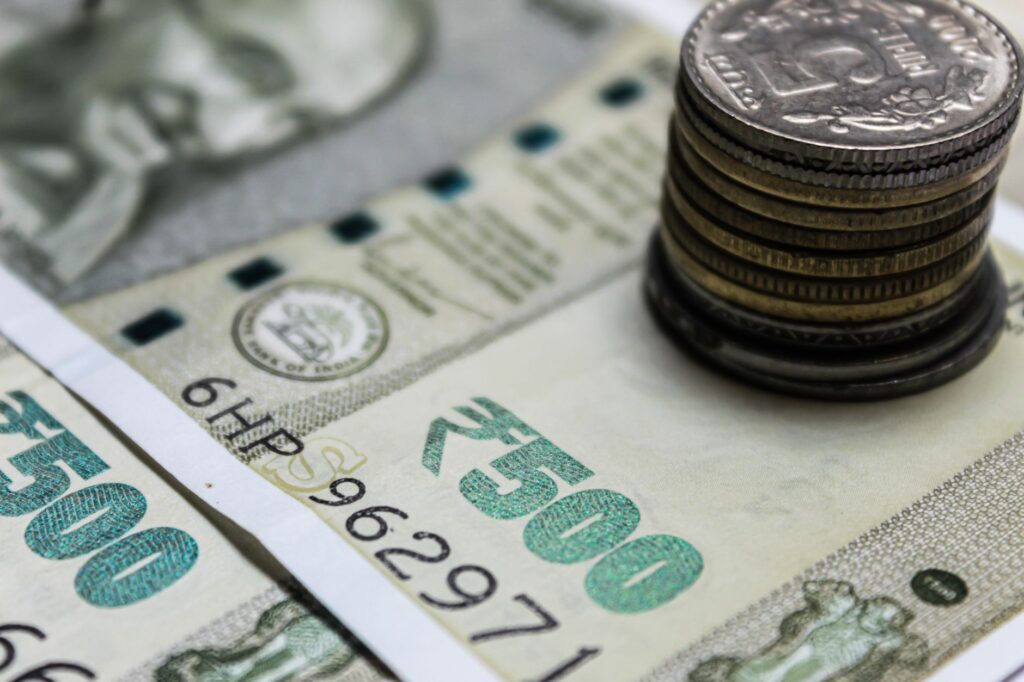
At ₹96.23 to the dollar, the rupee has already sent Indian investors a clear message: China EU trade tensions do not belong only in diplomatic cables. Markets noticed. The Sensex is at 77,200.48, down -0.54% today, while the Nifty 50 is at 24,066.55, down -0.60% today, proof that anxiety over global trade can travel quickly to Dalal Street.
Table of Contents
- Why China EU Trade Tensions Matter Now
- What Is Happening Across Global Markets
- What It Means for Indian Retail Investors
- What to Watch Next
- Expert Insight
- Frequently Asked Questions
- Key Takeaways
Why China EU Trade Tensions Matter Now
China EU trade has returned to the centre of market attention because it sits right where manufacturing, exports, pricing power and geopolitics meet. The research brief identifies China’s record trade surplus with the EU as the trigger for fresh tariff concerns. That matters. Tariffs rarely stay inside the borders of the countries that impose them; they move through supply chains, currencies, commodity markets and investor portfolios.
Why should a tariff dispute thousands of kilometres away bother a saver in Pune, Surat or Coimbatore? Because India may not stand on the main battlefield, but Indian companies still operate inside the same global trading system.
If tariff barriers rise, Chinese exporters may look for other markets. European manufacturers may change sourcing patterns. Commodity traders may alter positions. Foreign investors may cut exposure to risk assets. Each route can affect Indian equities, the rupee, inflation expectations and sector rotation.
The first impact on India may not look dramatic. The second one can matter more. If China EU trade tensions reprice goods flows, India could face both opportunity and pressure. Some exporters may gain if global buyers diversify supply chains. Some producers may struggle if Chinese goods enter other markets at aggressive prices. Consumers may pay more if key inputs become costlier. Investors, meanwhile, must decide whether markets face a short tariff scare or a deeper reset in global trade.
The RBI sits at the centre of the Indian response because the rupee, imported inflation and financial stability all fall within its policy view. The RBI repo rate stands at 5.25%, and that setting matters when external shocks start influencing currency and inflation expectations. A stable rupee gives policymakers room. A volatile rupee reduces it quickly.
SEBI, NSE and BSE also enter the picture. China EU trade headlines can move listed exporters, import-heavy companies, metals, capital goods and risk-sensitive sectors. In such periods, disclosures, risk controls and market surveillance draw more attention. Retail investors rarely experience geopolitics as a formal note from a foreign ministry. They experience it as a gap-down opening, a falling small-cap, a margin call, or a mutual fund portfolio that suddenly stops behaving like the headline index.
Think of it like vegetable prices after an erratic monsoon. The rain may fall far from your city, but the bill still changes at the local market.
Takeaway: China EU trade tensions are not just about China and Europe; they represent a live risk channel for India’s currency, inflation path and market mood.
What Is Happening Across Global Markets
The immediate signal in India looks defensive. As of 2026-07-15, the Sensex is at 77,200.48, with a -0.54% move today, while the Nifty 50 is at 24,066.55, with a -0.60% move today. These levels do not suggest panic on their own. Still, they show that Indian equities already face pressure while the external backdrop remains unsettled.
The rupee gives another important signal. USD/INR is at ₹96.23, which puts imported inflation and foreign investor behaviour at the heart of the China EU trade discussion. When the rupee weakens or swings sharply, import-heavy companies face higher landed costs. Oil, electronics, machinery, speciality chemicals and industrial inputs can all become more expensive in rupee terms if currency stress continues. Companies then face an old dilemma: absorb the hit and protect demand, or raise prices and risk volume pressure.
Crypto offers a useful, though imperfect, gauge of risk appetite. Bitcoin is at $64,611.00, or ₹6,218,296.00, while Ethereum is at $1,872.07. Crypto assets do not explain China EU trade directly. But they often respond to global liquidity, risk appetite and dollar conditions. When investors cut risk, high-volatility assets can stumble. When liquidity improves, speculative appetite often returns faster. Indian investors should not treat crypto as a clean macro signal. They should not ignore it either.
Here is the live market dashboard from the available data:
| Market indicator | Latest level | Current signal for Indian investors |
|---|---|---|
| Sensex | 77,200.48 | Under pressure today with a -0.54% move |
| Nifty 50 | 24,066.55 | Under pressure today with a -0.60% move |
| USD/INR | ₹96.23 | Points to elevated currency sensitivity |
| RBI repo rate | 5.25% | Shows the monetary policy backdrop facing external shocks |
| Bitcoin | $64,611.00 / ₹6,218,296.00 | Reflects global risk appetite outside traditional assets |
| Ethereum | $1,872.07 | Another high-volatility risk asset to monitor |
The tariff channel works in several ways. First, tariffs make traded goods costlier. If companies absorb the cost, margins shrink. If they pass it on, prices rise. Second, tariffs can redirect exports. Goods that face barriers in one market may move into another and pressure local producers there. Third, trade tensions push firms to redesign supply chains. That process costs money, takes time and often raises prices in the short run. Fourth, uncertainty can freeze capital expenditure decisions.
For India, China EU trade risk cuts across several market clusters.
- Exporters that compete with China in global markets may see opportunity if buyers diversify sourcing.
- Import-dependent companies may face cost pressure if input prices move higher.
- Metal and commodity-linked sectors may react to changes in China demand, EU industrial sentiment and inventory flows.
- Banks and financials may react through the broader growth, currency and risk-aversion channel.
- Consumer-facing companies may face margin pressure if imported inflation rises and demand does not support price hikes.
- IT and services exporters may feel indirect pressure if European business confidence weakens.
- Auto ancillary and capital goods companies may face both risks and opportunities if companies rework supply chains.
This is not a simple story. China EU trade tensions can hurt global markets, but not every Indian company loses. Some firms could gain from supply-chain diversification. Others may lose pricing power if Chinese exports flow into alternative markets. A third set may see limited revenue impact but higher working-capital and hedging costs because of rupee volatility.
The BSE and NSE will show this split through sector moves, not just headline indices. A fall in the Sensex or Nifty 50 gives the broad mood. The better signals often sit below the surface: which sectors hold up, which exporters attract buying, which import-heavy companies lose valuation support, and whether market breadth improves or weakens.
Takeaway: China EU trade friction can hit India through equities, currency, inflation expectations and sector-specific earnings risk at the same time.
What It Means for Indian Retail Investors
For Indian retail investors, the first question sounds simple: should this change portfolio strategy? Exposure, not emotion, should decide the answer.
If a portfolio leans heavily on import-heavy businesses, highly borrowed companies, small-caps with weak pricing power, or exporters dependent on one geography, China EU trade tensions deserve close attention. If the portfolio spreads across quality large-caps, domestic consumption, financials, cash-generative businesses and staggered mutual fund investments, investors can respond with more patience.
Rupee volatility offers the fastest transmission channel. At USD/INR of ₹96.23, every imported input becomes sensitive to currency movement. A company that buys in dollars and sells mainly in rupees carries a different risk from a company that earns in dollars and reports part of its costs in rupees. This distinction matters more during tariff shocks because currency and input prices can move together. Investors should read management commentary on hedging, import dependence and pricing power more closely than usual.
Inflation forms the second channel. Tariffs work like a tax on trade. They raise costs somewhere in the chain. Who pays when trade costs rise? The company, the consumer, or the investor often shares the burden in some form.
If China EU trade tensions lead to higher landed prices, supply delays or substitution costs, inflation pressure can build even without a domestic demand boom. For India, imported inflation does not only mean fuel. It can also appear in electronics, machinery, industrial intermediates, metals and components. The RBI repo rate at 5.25% reflects the current policy setting, but future policy expectations can shift if inflation risks last longer.
Risk assets form the third channel. Equities, high-beta sectors, small-caps, thematic funds and crypto all depend partly on global risk appetite. The Sensex at 77,200.48 and the Nifty 50 at 24,066.55 are already lower today, and investors need to ask what explains the fall: domestic earnings, global cues, or external risk repricing? If global risk aversion drives the move, even strong domestic stories can face short-term pressure.
Retail investors can think through portfolio buckets:
| Portfolio exposure | Possible impact from China EU trade tensions | Investor response |
|---|---|---|
| Export-oriented companies | May benefit from supply-chain diversification, but demand risk remains | Check geography mix and client concentration |
| Import-heavy companies | May face cost pressure if rupee volatility rises | Watch margins, hedging policy and pricing power |
| Metal and commodity stocks | May react sharply to global demand and tariff headlines | Avoid chasing moves without risk controls |
| Consumer companies | May face margin pressure if input costs rise | Prefer firms with strong brands and pricing discipline |
| IT and services exporters | May feel indirect impact through global corporate spending | Track deal commentary and European exposure qualitatively |
| Small-cap and high-beta stocks | May face sharper selling when risk appetite falls | Size positions conservatively |
| Crypto exposure | May remain volatile with global liquidity sentiment | Treat as high-risk allocation, not a currency hedge |
What should mutual fund investors do? SIP investors should avoid abrupt decisions based only on tariff headlines. A diversified equity SIP aims to absorb volatility, provided the time horizon and risk profile still make sense. Lump-sum investors need more caution. If global markets reprice trade risk, staggered deployment can reduce regret. Investors need not convert every macro headline into a portfolio trade. They should not ignore external shocks either.
Debt fund investors should watch the currency-inflation link. If imported inflation concerns rise, bond yields can respond more sharply to policy expectations and liquidity conditions. The RBI’s stance, communication and liquidity management matter even when the repo rate itself does not change. Investors in longer-duration debt funds should understand that external inflation shocks can affect mark-to-market returns.
Gold often enters the discussion during global tension, but the supplied market block does not include specific gold data. So the analysis must stay qualitative: investors often look at gold during currency stress and geopolitical uncertainty, but gold allocation should fit the portfolio plan rather than follow every tariff headline. The same logic applies to dollar assets. Currency diversification can help some investors, but it demands discipline, product understanding and tax awareness.
SEBI’s role matters because retail participation in equities, derivatives and thematic funds has widened. During global shocks, investors often overtrade index futures, options, borrowed positions or sector themes. That is risky. Market infrastructure on NSE and BSE offers access and liquidity, but access does not equal suitability. The more uncertain the macro backdrop, the more investors should respect position sizing.
ICAI-linked accounting norms and audit disclosures also matter for serious equity investors. Companies with foreign currency exposure, imported raw materials, overseas subsidiaries or export receivables usually give qualitative and quantitative disclosures in financial statements and filings. Investors should use those disclosures to judge whether a company has a natural hedge, a financial hedge, or open exposure. Many retail investors stop at revenue growth. Tariff cycles demand closer reading of notes to accounts, management discussion and risk factors.
The practical response does not involve predicting every tariff action. It involves reducing fragility. A portfolio with too much concentration, borrowed money, illiquid positions and no cash buffer can crack quickly. A portfolio with asset allocation discipline, a quality bias, emergency liquidity and staggered deployment can handle stress better. Which portfolio do you own?
Takeaway: Indian retail investors should treat China EU trade tensions as a portfolio risk audit, not as a reason for panic selling.
What to Watch Next
Rupee volatility and RBI signals
The first indicator is USD/INR, currently at ₹96.23. A stable rupee can cushion imported inflation concerns and reduce pressure on companies with dollar costs. Persistent rupee volatility, however, can affect input costs, hedging expenses, foreign investor behaviour and inflation expectations. Investors should watch RBI communication, liquidity operations and the tone around external stability.
Tariff language and retaliation risk
The second indicator is the tone of tariff actions. Markets can absorb a limited tariff move if it looks contained. They react more sharply when the risk shifts to retaliation, broader product coverage or supply-chain disruption. China EU trade tensions become more dangerous for India when companies start changing sourcing decisions, delaying shipments or rerouting goods at scale. The key is not only whether governments announce tariffs, but whether businesses start acting as if trade rules no longer look predictable.
Commodity and metal price behaviour
The third indicator is the reaction in commodities and metals. India imports many industrial inputs, and domestic metal companies also respond to global pricing cycles. If tariff tensions distort trade flows, prices can move for reasons unrelated to Indian demand. Retail investors holding metal, capital goods, infrastructure or manufacturing-linked stocks should track whether price moves reflect lasting demand or temporary trade disruption.
FII risk appetite and domestic flows
The fourth indicator is foreign investor appetite for Indian risk assets. When global markets turn nervous, emerging markets can face outflows even if domestic fundamentals remain steady. Domestic flows can cushion the impact, but they may not fully offset global risk reduction in every segment. The Sensex and Nifty 50 provide headline signals, yet sector rotation and market breadth reveal whether selling looks broad or selective.
Corporate commentary during earnings updates
The fifth indicator is company management commentary. Investors should listen for references to import costs, logistics delays, customer demand in Europe, competitive pressure from Chinese goods, hedging policies and pricing power. The best companies usually explain risk clearly. Vague commentary during a tariff cycle deserves scrutiny.
Takeaway: The next move in Indian markets will depend less on one headline and more on whether currency, commodities, foreign flows and corporate commentary start pointing in the same direction.
Expert Insight
Macro and equity strategists generally view China EU trade tensions as a transmission risk rather than a single-event shock for India. Their core argument is simple: tariffs change relative prices, but uncertainty changes behaviour. Exporters delay decisions. Importers hedge more aggressively. Investors trim high-beta exposure. Central banks pay closer attention to imported inflation.
For Indian portfolios, the expert lens stays straightforward: track rupee volatility, pricing power and balance-sheet strength before chasing any short-term beneficiary of supply-chain shifts.
Takeaway: The professional approach is to separate durable beneficiaries from temporary headline trades.
Frequently Asked Questions
Will China EU trade tensions weaken the rupee?
They can add pressure if global investors reduce risk and move toward dollar assets. USD/INR is currently at ₹96.23, so Indian investors should watch whether rupee volatility rises alongside tariff headlines. A weaker rupee can raise imported costs and affect companies with dollar liabilities or imported inputs.
Can tariffs between China and the EU increase inflation in India?
Yes, they can contribute to imported inflation if trade disruption raises the cost of goods, components or commodities that India imports. The impact will depend on product categories, currency movement and whether companies pass higher costs to consumers. The RBI repo rate is 5.25%, making inflation expectations an important policy variable.
Should I sell stocks because Sensex and Nifty are down today?
The Sensex is at 77,200.48, down -0.54% today, and the Nifty 50 is at 24,066.55, down -0.60% today. A one-day fall alone is not a complete investment signal. Investors should review asset allocation, sector exposure and time horizon before acting.
Which Indian sectors are most exposed to China EU trade tensions?
Sectors with import dependence, export exposure, commodity sensitivity or global supply-chain links are more exposed. This can include manufacturing, metals, capital goods, auto ancillaries, electronics-linked businesses and select exporters. The exact impact differs by company, so investors should read filings and management commentary rather than rely only on sector labels.
Is Bitcoin a safe hedge during global trade tensions?
Bitcoin is at $64,611.00, or ₹6,218,296.00, but that does not make it a safe hedge for Indian investors. It remains a volatile risk asset and can move sharply with global liquidity sentiment. Investors should treat crypto exposure as high risk and size it accordingly.
Key Takeaways
- Track USD/INR closely; at ₹96.23, the rupee is a key channel for imported inflation and corporate margin risk.
- Do not treat all exporters as winners; China EU trade tensions can create opportunities, but demand risk and pricing pressure remain.
- Watch import-heavy companies for margin pressure, especially where pricing power is weak.
- Use the Sensex at 77,200.48 and Nifty 50 at 24,066.55 as broad mood indicators, but study sector moves for better signals.
- Avoid overtrading tariff headlines through derivatives or high-beta stocks.
- Prefer companies with strong balance sheets, clear disclosures, hedging discipline and pricing power.
- Keep SIPs aligned with long-term goals, but stagger fresh lump-sum investments if global markets remain volatile.
Disclaimer: This article is for informational purposes only and does not constitute investment advice. Please consult a SEBI-registered financial advisor before making investment decisions.
Sources & references

Bhavik Vaid
Bhavik Vaid writes on Indian markets, taxation, banking and personal finance for CADialogue. He covers RBI policy, GST and income-tax changes, mutual funds and market moves, translating them into practical guidance for retail investors, salaried professionals and business owners in India.


