Pre-Market Trade Setup: Nifty, Rupee in Focus
Pre-market trade setup: Nifty 50 at 23,618, rupee at Rs 96.57, crude sensitivity and global cues shape today's market moves for traders at the open.
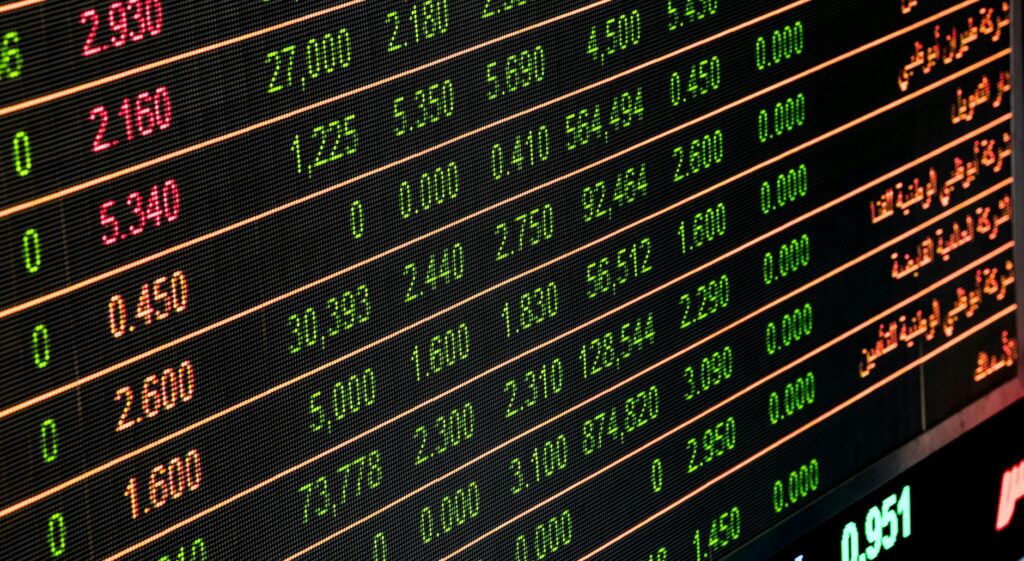
The rupee is the number traders cannot ignore this morning: USD/INR stands at ₹96.57, keeping imported inflation, crude sensitivity and foreign-flow risk firmly on the table. The Nifty 50 closed marginally lower at 23,618 on Tuesday, yet broader markets outperformed, creating a tricky pre-market setup where index strength, currency stress and global risk appetite point in different directions. Pre-market action: here’s the core message for today’s session, momentum is not broken, but the market has less room for complacency.
Table of Contents
- Market Context Before The Opening Bell
- Pre Market Trade Setup For Today
- What This Means For Indian Retail Investors
- What To Watch Next
- Expert Insight
- Frequently Asked Questions
- Key Takeaways
Market Context Before The Opening Bell
The Indian market enters today’s session with a mixed but constructive backdrop. The Nifty 50 closed marginally lower at 23,618 on Tuesday, according to the research brief, while the broader market outperformed. That combination matters because it shows that the index may be pausing, but risk appetite has not vanished from the domestic market. In plain terms, traders are not rushing for the exit; they are becoming more selective.
The live market picture is mildly positive. The Sensex is at 75,318.39, up +0.16% today, while the Nifty 50 is at 23,659.00, up +0.17% today. These are not runaway gains. They are signals of a market that wants to hold ground, even as macro headwinds build around the rupee and crude oil. The pre-market read, therefore, is not a clean bullish call. It is a market that may open with resilience but still faces pressure on every uptick.
Global cues are supportive. The S&P 500 is at 7,432.97, up +1.08% today, and the NASDAQ is at 26,270.36, up +1.54% today. For India, this matters through the foreign institutional investor channel, risk-on sentiment and technology-sector appetite. A strong Wall Street session can lift sentiment in Indian equities, particularly in export-linked and globally benchmarked sectors. But one question sits above the screen: can global optimism offset a weak rupee and elevated crude prices?
The domestic macro overlay is more complicated. USD/INR at ₹96.57 keeps the currency market central to the equity setup. A weak rupee can support some exporters, but it also raises concerns for companies that import raw materials, carry foreign-currency liabilities or face margin pressure from energy costs. At the same time, the RBI repo rate stands at 5.25%, which keeps the cost-of-capital debate relevant for rate-sensitive sectors such as banks, real estate, autos and non-bank lenders.
This is why today’s pre-market view requires discipline. A mild positive index move does not remove macro risk. A weak currency does not automatically kill equity sentiment either. The market is balancing both forces at once: global support on one side, domestic cost pressure on the other.
Takeaway: the setup is not bearish by default, but it demands selective positioning rather than broad, aggressive buying.
Pre Market Trade Setup For Today
Pre-market action: here’s how the board looks before traders place the first serious orders of the day. The Nifty 50 is trading at 23,659.00, up +0.17% today, while the Sensex is at 75,318.39, up +0.16% today. The Tuesday close of 23,618 on the Nifty 50 gives traders a reference point: the index has recovered mildly, but not enough to declare a decisive breakout.
The immediate trade setup is sideways to under pressure, as the research brief indicates. That may sound contradictory when both Sensex and Nifty are in the green, but it is not. Markets often rise in early trade because of global cues, short covering or selective buying, while still facing overhead pressure from currency weakness, crude sensitivity and cautious institutional positioning. A positive tick is not the same as a durable trend.
Here is the current market snapshot using only verified and live data:
| Indicator | Current Reading | Today’s Move | Why It Matters For India |
|---|---|---|---|
| Sensex | 75,318.39 | +0.16% today | Shows mild strength in large-cap Indian equities |
| Nifty 50 | 23,659.00 | +0.17% today | Main benchmark for index traders and passive flows |
| Nifty 50 Tuesday Close | 23,618 | Marginally lower on Tuesday | Gives a near-term reference point for today’s setup |
| S&P 500 | 7,432.97 | +1.08% today | Supports global risk appetite and FII sentiment |
| NASDAQ | 26,270.36 | +1.54% today | Helps sentiment in technology and growth-linked themes |
| USD/INR | ₹96.57 | Live currency level | Signals pressure from rupee weakness |
| RBI Repo Rate | 5.25% | Current policy rate | Keeps borrowing-cost sensitivity in focus |
The key tension lies between global risk appetite and domestic macro pressure. The S&P 500 and NASDAQ are firmly positive today, and that improves the probability of a constructive opening tone in India. Foreign investors often respond to global equity strength when allocating to emerging markets, and the research brief says FIIs have turned net buyer. That is an important sentiment shift, especially when domestic indices are trying to hold recent levels.
Yet the rupee weakens the argument for a one-way rally. USD/INR at ₹96.57 can affect Indian equities through several channels. Import-heavy sectors face higher landed costs. Companies with foreign-currency borrowing may face translation pressure. Energy-linked businesses feel the pinch when crude is elevated. Even domestic consumption companies can face margin questions if input costs harden. This is why a positive FII signal alone does not guarantee smooth sailing.
The RBI repo rate at 5.25% also remains a relevant anchor. When the policy rate stays at this level, markets keep watching bank lending rates, deposit costs, household borrowing appetite and corporate capex decisions. A stable policy rate can support planning, but it does not eliminate financing sensitivity. For equity investors, the important question is whether earnings growth can absorb the current rate and currency environment.
For intraday traders, this is a market where price confirmation matters more than opinion. If the Nifty 50 sustains above the Tuesday closing reference of 23,618, bulls can argue that the index is absorbing macro pressure. If it slips back below that reference and fails to recover, traders may treat the early strength as fragile. No one needs to guess. The screen will reveal whether buyers are defending levels or simply reacting to global cues.
Sector selection becomes more important than index direction. Export-oriented sectors may receive attention because of rupee weakness, although company-level results and hedging policies still matter. Import-dependent businesses may face questions. Financials remain sensitive to the RBI rate backdrop. Oil-linked sectors can move sharply on crude headlines, even when index movement looks calm.
The broader-market outperformance noted in the brief also deserves caution. When smaller and mid-sized stocks outperform while the headline index consolidates, it can show strong market breadth. But it can also signal risk appetite moving into less liquid pockets. Retail investors should not confuse broad participation with guaranteed safety. In a currency-sensitive market, liquidity can shift quickly.
On the regulatory side, NSE and BSE surveillance mechanisms remain relevant whenever volatility rises in individual names. SEBI‘s framework around disclosure, margining and market conduct aims to protect market integrity, but it cannot protect investors from poor risk management. The exchange screen gives opportunity; the risk system decides survival.
Pre-market action: here’s the practical approach, trade lighter if the index opens strong but fails to broaden leadership, stay selective if buying is concentrated in a few heavyweights, and avoid chasing illiquid counters only because broader markets performed well previously.
Takeaway: today’s setup favours confirmation-based trading, selective stock picking and close attention to the rupee rather than blind optimism from positive global cues.
What This Means For Indian Retail Investors
Retail investors should treat today’s pre-market tone as a call for discipline, not excitement. The Nifty 50 at 23,659.00 and Sensex at 75,318.39 show that Indian equities are holding up, but the macro backdrop is not frictionless. The weak rupee and elevated crude oil prices create a cost-pressure environment that can affect earnings expectations, especially for sectors dependent on imported inputs.
For long-term investors, the key is not whether the index rises or falls in the first hour. The key is portfolio quality. Companies with pricing power, strong balance sheets, disciplined capital allocation and transparent disclosures tend to handle currency and commodity volatility better than weakly managed businesses. Retail investors should review exposure to high-debt companies, import-sensitive sectors and stocks where the investment case depends only on momentum.
For traders, stop-loss discipline becomes non-negotiable. A sideways to under pressure market can be frustrating because it gives false breakouts and sharp reversals. A stock may look strong at the open and still fade if the rupee or crude narrative worsens during the session. Intraday traders should avoid averaging down in leveraged positions, especially when the broader setup lacks a decisive trend.
Mutual fund investors can read this differently. A mild pre-market move does not require drastic action in systematic investment plans. SIP investors usually benefit from process and consistency rather than reacting to every macro headline. However, lump-sum investors may prefer staggered deployment when currency and commodity risks remain active. The goal is not to predict every tick; it is to avoid putting all capital to work on a single emotional day.
What about foreign flows? The research brief says FIIs have turned net buyer, which gives the market a sentiment cushion. But FII behaviour can change when the rupee weakens, global yields move, or risk appetite shifts. A foreign investor earning in dollars watches both equity returns and currency movement. If the rupee comes under pressure, India must deliver stronger equity returns to remain attractive in currency-adjusted terms.
Indian retail investors should also understand how RBI policy flows into market behaviour. The RBI repo rate at 5.25% affects the cost of money across the economy. Banks price loans, corporates evaluate projects, and households make borrowing decisions with reference to the rate environment. Equity valuations, especially in rate-sensitive sectors, cannot be separated from this backdrop.
SEBI’s role also matters in the retail context. Disclosure standards, related-party transaction rules, insider trading regulations and market surveillance frameworks exist to create fairer markets. But retail investors must still read exchange filings, watch promoter behaviour, avoid social-media tips and distinguish between verified information and market rumour. In volatile pre-market conditions, misinformation spreads faster than official clarification.
The BSE and NSE ecosystem gives investors real-time access, but access is not the same as advantage. A retail trader competing with algorithmic systems and institutional desks should not rely on speed alone. Better risk sizing, patient entries and clear exits often matter more. If a trade requires perfect timing, it may not be a good retail trade.
A practical checklist for retail investors today:
- Check whether the Nifty 50 sustains above the Tuesday closing reference of 23,618.
- Watch USD/INR at ₹96.57 for signs of further rupee stress.
- Track whether buying is broad-based or limited to select index heavyweights.
- Avoid chasing stocks that rise only on rumours without exchange-backed disclosures.
- Review exposure to import-heavy and debt-heavy companies.
- Use staggered buying rather than large one-shot deployment in uncertain conditions.
- Keep position sizes modest if trading intraday.
Could the market still rise despite all these risks? Yes. Markets can climb a wall of worry when liquidity, earnings expectations and global sentiment align. But should retail investors assume that every dip will be bought? No. That assumption is expensive when macro variables turn against risk assets.
Takeaway: retail investors should stay invested in quality, trade with strict risk controls and avoid confusing a positive pre-market screen with a risk-free session.
What To Watch Next
The next leg of the market will depend less on one headline and more on how several indicators interact through the session. Traders should watch the index, currency, crude narrative, foreign flows and sector leadership together. One signal can mislead; a cluster of signals tells the story.
Nifty 50 Behaviour Around The Tuesday Reference
The Nifty 50 closed at 23,618 on Tuesday and trades at 23,659.00 today. That makes the Tuesday close a useful reference point for sentiment. If the index holds above that zone through market volatility, bulls retain an argument for resilience. If it repeatedly slips below and fails to reclaim strength, the market may shift from consolidation to pressure.
For traders, the key is not just whether the index is green. Watch the quality of the move. A slow grind higher with improving breadth is healthier than a jump led by a handful of names. If broader markets continue to outperform without excessive volatility, risk appetite remains alive.
USDINR And Imported Cost Pressure
USD/INR at ₹96.57 is one of the most important indicators for today’s session. A weak rupee affects crude imports, input costs, foreign investor returns and corporate hedging decisions. Exporters may receive a sentiment boost, but the benefit is not uniform because hedging, contract structure and cost base differ across companies.
Retail investors should avoid broad assumptions such as “weak rupee means all IT stocks rise” or “weak rupee means all importers fall.” Markets price nuance. A company with strong hedges may behave differently from a peer with open exposure.
Crude Oil Narrative
The research brief flags elevated crude oil prices as a reason analysts expect the market to remain sideways to under pressure. India imports a large share of its energy requirement, so crude prices affect the current account, inflation expectations, fiscal arithmetic and corporate margins. Even without a specific live crude price in the data block, the direction of crude remains central to the trade setup.
If crude stays elevated while the rupee remains weak, markets may become more cautious on sectors exposed to fuel, logistics and raw material costs. If crude cools, sentiment can improve quickly because the pressure on macro stability eases.
FII Flow Continuity
The brief says FIIs have turned net buyer, and that supports sentiment. But the market will watch whether this buying continues or fades. Foreign flows matter because they affect liquidity, index heavyweights and currency expectations. Sustained buying can cushion dips, while inconsistent flows can make rallies vulnerable.
The rupee is the key swing factor. Foreign investors evaluate India in both local-currency and dollar terms. When USD/INR stands at ₹96.57, currency-adjusted returns remain under close watch.
Sector Leadership And Market Breadth
Broader markets outperformed on Tuesday, according to the research brief. That is encouraging only if leadership remains healthy and not speculative. Investors should look for participation across financials, consumption, industrials, technology and defensives rather than narrow strength in high-beta pockets.
Sector leadership tells investors whether the market is building conviction or merely rotating risk. A strong index with weak breadth can hide fragility. A flat index with improving breadth can signal accumulation.
Takeaway: the best signal today will come from the combined behaviour of the Nifty 50, USD/INR, crude narrative, FII flows and breadth rather than any single headline.
Expert Insight
Analysts at domestic brokerages are likely to treat this pre-market setup as a balance between supportive global cues and local macro caution. The positive moves in the S&P 500 at 7,432.97 and NASDAQ at 26,270.36 can support sentiment at the open, while USD/INR at ₹96.57 and elevated crude oil prices may cap aggressive risk-taking. Their core message would be simple: use rallies to review weak positions, add only to high-conviction names, and wait for confirmation before assuming that the market has moved from sideways consolidation into a fresh directional trend.
Takeaway: professional desks are unlikely to ignore the green screen, but they are also unlikely to dismiss the rupee and crude risks behind it.
Frequently Asked Questions
Is Nifty bullish or bearish today?
The Nifty 50 is at 23,659.00, up +0.17% today, so the live screen is mildly positive. However, the research brief points to a sideways to under pressure market because of a weak rupee and elevated crude oil prices. The better description is cautious-positive, not outright bullish.
Should I buy stocks in pre-market today?
Pre-market buying should be selective. If you are a long-term investor, focus on quality businesses rather than chasing early price moves. If you are a trader, wait for confirmation after the open because pre-market action can reverse quickly when currency or crude concerns dominate.
Why is the rupee important for the stock market?
USD/INR at ₹96.57 matters because a weak rupee can raise import costs, affect companies with foreign-currency exposure and influence foreign investor returns. Some exporters may benefit, but the impact varies by company. For the broader market, rupee weakness usually raises macro caution.
Are FIIs buying Indian stocks now?
The research brief says FIIs have turned net buyer. That supports sentiment, but investors should watch whether the buying continues. FII flows can change quickly when the rupee, global risk appetite or commodity prices move sharply.
What sectors should retail investors watch today?
Retail investors should watch export-linked sectors, import-sensitive sectors, financials and crude-linked businesses. The RBI repo rate at 5.25% keeps rate-sensitive areas in focus, while USD/INR at ₹96.57 keeps currency-sensitive companies on the radar. Sector leadership after the open will matter more than pre-market indications alone.
Takeaway: retail investors searching for a simple yes-or-no market call should instead track confirmation, currency movement and sector breadth through the session.
Key Takeaways
- The Nifty 50 is at 23,659.00, up +0.17% today, after closing marginally lower at 23,618 on Tuesday.
- The Sensex is at 75,318.39, up +0.16% today, showing mild strength but not a decisive risk-on surge.
- Global cues are supportive, with the S&P 500 at 7,432.97, up +1.08% today, and the NASDAQ at 26,270.36, up +1.54% today.
- USD/INR at ₹96.57 remains the biggest macro warning signal for Indian equities.
- The RBI repo rate at 5.25% keeps rate-sensitive sectors such as banks, real estate, autos and lenders in focus.
- Analysts expect the market to remain sideways to under pressure because the weak rupee and elevated crude oil prices offset some support from FII buying.
- Pre-market action: here’s the bottom line, trade selectively, avoid leverage-heavy bets, and let the first phase of market action confirm direction before committing fresh capital.
Takeaway: today’s session rewards patience, risk control and stock selection more than headline-driven trading.
Disclaimer: This article is for informational purposes only and does not constitute investment advice. Please consult a SEBI-registered financial advisor before making investment decisions. Related: IT stocks pushing Nifty. Related: RBI rupee action. Related: oil prices Iran impact.
Sources & references

Bhavik Vaid
Bhavik Vaid writes on Indian markets, taxation, banking and personal finance for CADialogue. He covers RBI policy, GST and income-tax changes, mutual funds and market moves, translating them into practical guidance for retail investors, salaried professionals and business owners in India.


