Chip Stocks Rally as SK Hynix and Samsung Court Investors
SK Hynix shares are in focus as buybacks and Samsung's payout buzz revive chip stocks; see what the global rally means for Indian investors today.
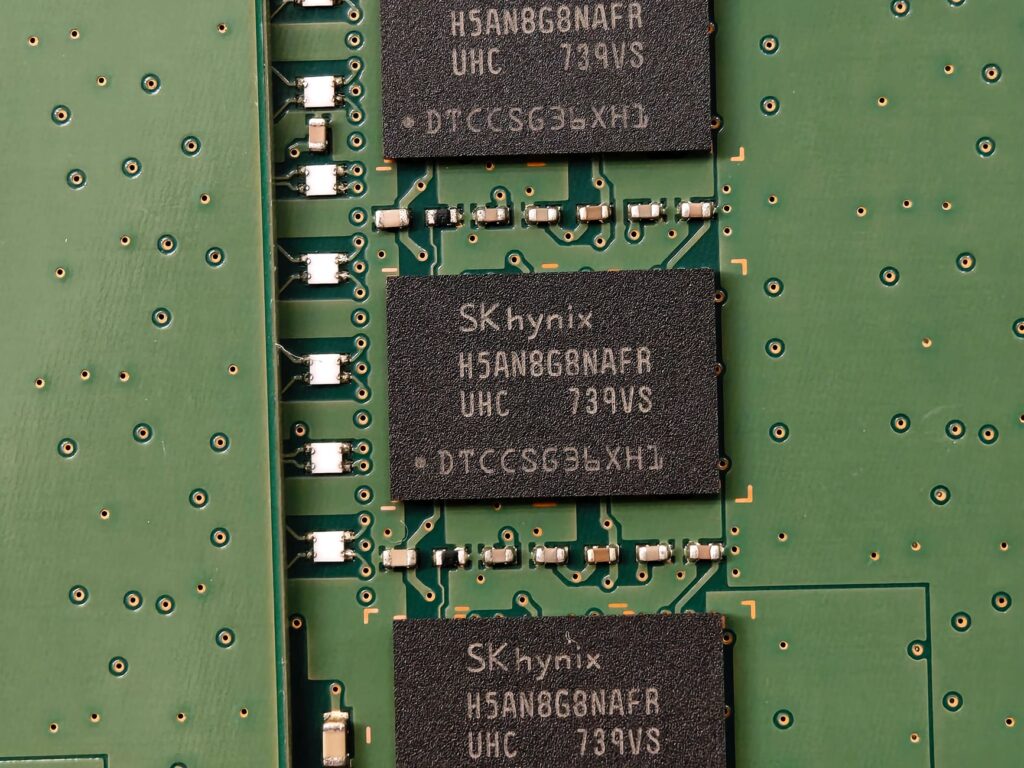
Indian equities look almost sleepy even as the global semiconductor trade turns risk-on. The Sensex is at 77,548.74, up +0.01% today, and the Nifty 50 is at 24,232.65, unchanged at +0.00%. But outside India, chip stocks have grabbed attention again. SK Hynix has pushed shareholder returns to the centre of the memory-chip story with a large buyback, while an Economic Times report citing media reports says Samsung Electronics may announce more than $72 billion in shareholder returns.
So, what should Indian investors make of this? Is this the beginning of a wider semiconductor re-rating, or merely a burst of short-covering in a crowded global trade?
Table of Contents
- Why SK Hynix and Samsung Electronics are back in focus
- SK Hynix shareholder returns and the chip rebound
- What this means for Indian retail investors
- What to watch next
- Expert Insight
- Frequently Asked Questions
- Key Takeaways
Why SK Hynix and Samsung Electronics are back in focus
The semiconductor trade has returned to the market’s front page because shareholder returns can do what earnings commentary often cannot. They force investors to reassess cash generation, management confidence and capital allocation across the memory-chip cycle.
SK Hynix has announced a large buyback. Separately, an Economic Times report citing media reports says Samsung Electronics may announce more than $72 billion in shareholder returns. That combination matters because memory-chip stocks sit at the crossroads of artificial intelligence demand, global risk appetite, technology capex and currency flows.
The KOSPI has reacted sharply, reflecting renewed investor interest in South Korea’s technology-heavy equity market. This is not just about one company. When SK Hynix returns capital, investors treat it as a signal of balance-sheet comfort and management confidence. When media reports link Samsung Electronics to a shareholder return plan of more than $72 billion, markets start asking whether large semiconductor companies now need to compete harder for global investor capital.
Why should Dalal Street care about a rally in Korean chip stocks? Because global technology money moves quickly, and Indian portfolios increasingly feel those moves through mutual funds, overseas funds, currency shifts and foreign institutional flows.
For India, the timing is delicate. Domestic benchmarks remain steady: the Sensex is at 77,548.74, up +0.01% today, and the Nifty 50 is at 24,232.65, up +0.00% today. Global equities, however, look softer. The S&P 500 is at 7,641.16, down -0.87% today, and the NASDAQ is at 26,067.17, down -1.00% today.
That gap between local calm and overseas technology pressure deserves attention. It is a bit like watching a Mumbai local train platform look orderly just before the next packed train arrives. The surface can look calm. The next rush may still come fast.
Takeaway: SK Hynix and Samsung Electronics are not just moving Korean equities; they are testing whether global investors want to pay more for semiconductor cash flows again.
SK Hynix shareholder returns and the chip rebound
The core development is simple. SK Hynix has announced a large buyback, and Samsung Electronics is reportedly preparing a shareholder return programme of more than $72 billion, according to the Economic Times headline citing media reports.
These are not small signals. In cyclical sectors such as memory chips, buybacks and large return plans often act as confidence markers. Companies usually avoid aggressive shareholder payouts when they worry about severe balance-sheet stress or a long demand slump.
There is also a macro layer. Semiconductor stocks respond sharply to interest-rate expectations because investors value long-duration technology earnings more when yields ease. The research brief points to easing yields and AI-driven semiconductor demand as part of the backdrop. That matters for India because foreign portfolio investors often compare Indian equities with global technology opportunities.
If global chip stocks regain leadership, some incremental capital may rotate toward offshore technology exposure. Currency adds another layer, with USD/INR at ₹95.74.
Here is the verified market snapshot Indian investors should keep in view:
| Market signal | Latest verified level or move | Why it matters for Indian investors |
|---|---|---|
| Sensex | 77,548.74, +0.01% today | Shows Indian large-cap equities are broadly steady despite global tech volatility |
| Nifty 50 | 24,232.65, +0.00% today | Indicates domestic index-level risk appetite is flat, not euphoric |
| S&P 500 | 7,641.16, -0.87% today | Captures pressure in broader US equities, relevant for global allocation decisions |
| NASDAQ | 26,067.17, -1.00% today | Tracks risk appetite in technology-heavy shares, including semiconductor sentiment |
| USD/INR | ₹95.74 | Affects returns for Indians investing in overseas equities and global funds |
| RBI repo rate | 5.25% | Keeps domestic fixed-income and equity valuation debates anchored around the current policy rate |
| Samsung Electronics reported plan | More than $72 billion | Signals the scale of potential shareholder return under discussion |
| SK Hynix action | Large buyback announced | Suggests management confidence and stronger shareholder-return focus |
For retail investors, one distinction matters above all: business momentum versus market momentum.
Business momentum comes from demand for advanced memory, server spending and AI-related semiconductor requirements. Market momentum comes from investors bidding up stocks because buybacks, dividends or return plans reduce uncertainty around capital allocation. SK Hynix sits at the centre of both forces, which explains why investors have treated its announcement as more than a routine corporate action.
But investors should avoid a common mistake. Not every company connected to semiconductors benefits equally. A memory-chip manufacturer, a design-services company, an electronics assembler, a capital-goods supplier and a listed Indian technology-services firm all run on different economics. Their operating leverage, customer concentration, currency sensitivity and regulatory disclosures vary sharply.
A rally in Korean chip stocks does not automatically translate into a rally in every Indian stock with a semiconductor-adjacent story.
SEBI‘s disclosure framework matters here. Indian listed companies must disclose material information to exchanges such as the NSE and BSE. Investors should treat exchange filings as primary evidence rather than relying on social media interpretations of global news.
If an Indian company claims exposure to semiconductor demand, investors should look for customer contracts, capex disclosures, segment commentary and risk factors in filings. If those details do not appear, the story may carry more narrative than earnings substance.
The capital-return angle also needs discipline. Buybacks can support per-share metrics, but they do not remove cyclicality. A company can return capital and still face price pressure if the memory-chip cycle turns. Similarly, a reported shareholder return plan can lift sentiment before investors know the exact structure, timing or funding mix.
Is a buyback enough to justify buying the entire semiconductor theme? Clearly not.
Takeaway: The SK Hynix buyback and Samsung Electronics report have revived semiconductor sentiment, but investors should separate verified capital-return actions from broad thematic enthusiasm.
What this means for Indian retail investors
Indian retail investors do not need to own Korean equities directly to feel this story. Global semiconductor rallies influence Indian portfolios through international mutual funds, exchange-traded products, domestic technology shares, electronics-manufacturing expectations, currency movements and foreign institutional flows.
If global investors move back into technology and chip stocks, Indian portfolios with overseas exposure may behave differently from portfolios concentrated only in domestic financials, consumption or industrials.
Currency can swing the outcome. USD/INR is at ₹95.74, so rupee movement can amplify or reduce the rupee returns from overseas assets. A US-listed or global technology fund can rise in dollar terms, but the Indian investor’s final return also depends on conversion into rupees. Rupee weakness can cushion overseas returns when foreign assets stay flat, though it can also signal broader macro pressure.
That is why investors should evaluate global semiconductor exposure in portfolio currency terms, not just stock-price terms.
What should retail investors do now? First, avoid chasing a headline. SK Hynix announcing a buyback sends a meaningful signal, but the price reaction may already capture part of the good news. Second, check whether your current portfolio already has technology concentration through mutual funds, global funds or Indian IT-heavy schemes. Third, assess whether you are buying a semiconductor business, a technology platform, or simply a stock that has adopted semiconductor language to attract attention.
There is also a regulatory and taxation angle. SEBI-regulated mutual funds provide disclosures through scheme documents, factsheets and portfolio statements. Direct overseas investments or global brokerage routes involve compliance, remittance and reporting requirements that investors must understand before acting.
On the accounting side, ICAI-aligned tax and reporting standards influence how gains, foreign assets and disclosures are handled. Retail investors should seek professional guidance where needed rather than assuming that offshore investing works exactly like buying an NSE or BSE-listed share.
Indian investors should also compare equity risk with the domestic rate backdrop. The RBI repo rate is 5.25%, which keeps the fixed-income comparison relevant. If investors accept high volatility in global semiconductor names, the expected upside should compensate for drawdowns, currency risk and timing risk.
A buyback-led rally can look attractive. A disciplined investor still asks what role this exposure plays in the overall portfolio.
A practical checklist can help:
- Check whether your mutual funds already own global technology or semiconductor-linked names.
- Read the latest portfolio disclosure before adding a new thematic fund.
- Avoid buying Indian small-cap names only because they use semiconductor language in presentations.
- Track USD/INR at ₹95.74 when evaluating overseas returns.
- Compare potential equity volatility with the RBI repo rate at 5.25% and your own fixed-income alternatives.
- Use NSE and BSE filings to verify claims made by Indian listed companies.
- Do not assume a Korean market rally automatically validates every semiconductor-related Indian stock.
For investors with a long horizon, the semiconductor theme can remain relevant because AI-related demand continues to influence memory and advanced-chip sentiment. But the entry point matters. A good theme bought at an overheated price can still disappoint. A volatile sector demands position sizing, staggered allocation and a willingness to tolerate drawdowns.
Takeaway: Indian investors should treat the SK Hynix-led chip rally as a portfolio signal, not a trading command.
What to watch next
Management commentary from SK Hynix
The market will watch how SK Hynix explains the buyback. Does management present it as a one-off capital action, or as part of a broader shareholder-return discipline?
The difference matters. A one-off action may support sentiment temporarily, while a sustained framework can influence how investors value future cash flows. Indian investors should read management commentary for language around demand, capital expenditure, inventories and shareholder payouts.
Details of the Samsung Electronics return plan
The Economic Times headline points to a shareholder return programme of more than $72 billion, but investors still need to watch the eventual structure. Will the plan prioritise dividends, repurchases, or another mechanism? Will Samsung Electronics act immediately or spread the plan out?
Until final details arrive, the market may trade on expectations rather than confirmed cash distribution.
KOSPI follow-through
The KOSPI reaction matters because South Korea’s market closely tracks global semiconductor sentiment. A sharp one-day surge can reflect positioning. Sustained follow-through would suggest deeper investor conviction.
Indian investors should watch whether foreign flows continue to support Korean technology shares or whether traders book gains and the move fades.
NASDAQ and global risk appetite
The NASDAQ is at 26,067.17, down -1.00% today, which shows that technology risk appetite does not look uniformly strong. That contrast matters.
If Korean semiconductor shares rally while the broader US technology index weakens, investors should ask whether the move reflects one company, the sector, or a short-term rotation. Global confirmation would make the rally more durable.
Rupee and RBI signals
USD/INR at ₹95.74 affects Indian investors with overseas exposure, while the RBI repo rate at 5.25% anchors the domestic valuation debate. If currency volatility rises, overseas technology returns can become harder to interpret in rupee terms.
Investors should track both equity performance and currency movement before increasing global semiconductor exposure.
Takeaway: The next signal is not just price action; investors need company commentary, currency stability and global technology risk appetite to confirm the rally.
Expert Insight
Analysts who track Asian technology equities argue that the market now rewards capital discipline as much as growth. They believe SK Hynix has strengthened the investor conversation by linking memory-chip optimism with shareholder returns. The reported Samsung Electronics plan of more than $72 billion also raises expectations for how large semiconductor companies communicate with shareholders.
For Indian investors, the expert view is straightforward: do not buy the theme blindly. Buy only where disclosures, balance-sheet strength and valuation discipline support the story.
Takeaway: Capital returns can improve sentiment, but verified cash-flow durability should decide allocation.
Frequently Asked Questions
Is SK Hynix a good stock to buy now?
SK Hynix is back in focus because of its buyback and its role in the global memory-chip cycle. Whether it is suitable depends on your risk profile, access route, currency exposure and existing technology allocation. Indian investors should avoid buying only because of a headline rally and should consult a SEBI-registered advisor before acting.
How can Indian investors get exposure to global chip stocks?
Indian investors can get exposure through regulated global mutual funds, international funds, exchange-traded products available through approved platforms, or direct overseas investment routes where compliant. Each route has different costs, taxation, currency impact and disclosure standards. Before investing, check scheme documents, portfolio holdings and regulatory requirements.
Will the SK Hynix buyback help Indian semiconductor stocks?
It may improve sentiment toward semiconductor-related businesses, but it does not automatically improve earnings for Indian listed companies. Investors should verify whether an Indian company has actual semiconductor revenue, signed contracts, credible capex and exchange-filed disclosures. Narrative alone is not enough.
Why does USD/INR matter for investing in chip stocks?
USD/INR is at ₹95.74, and that affects rupee returns from overseas investments. If you buy a foreign asset, your final return depends on both the asset price and the currency conversion. Currency movement can either add to or reduce your gains.
Should I invest in semiconductor funds after the KOSPI rally?
A KOSPI rally can signal improving global appetite for chip stocks, but it should not be the only reason to invest. Review your current portfolio, risk tolerance, investment horizon and exposure to technology. Thematic funds can be volatile, so staggered allocation is usually safer than impulsive lump-sum buying.
Takeaway: Retail investors should search for evidence, not excitement, before acting on the semiconductor rally.
Key Takeaways
- SK Hynix has announced a large buyback, putting shareholder returns at the centre of the semiconductor rally.
- The Economic Times headline citing media reports links Samsung Electronics to a shareholder return programme of more than $72 billion.
- Indian markets are steady, with the Sensex at 77,548.74 and the Nifty 50 at 24,232.65.
- Global technology risk is not uniformly positive, with the NASDAQ at 26,067.17, down -1.00% today.
- USD/INR at ₹95.74 matters for Indians investing in overseas technology and semiconductor funds.
- The RBI repo rate at 5.25% keeps the equity-versus-fixed-income comparison relevant.
- Use SEBI-regulated disclosures, NSE filings and BSE filings to verify Indian company claims linked to semiconductor demand.
Takeaway: The chip rebound deserves attention, but disciplined Indian investors should verify exposure, manage currency risk and avoid chasing unconfirmed narratives.
Disclaimer: This article is for informational purposes only and does not constitute investment advice. Please consult a SEBI-registered financial advisor before making investment decisions.
Sources & references

Bhavik Vaid
Bhavik Vaid writes on Indian markets, taxation, banking and personal finance for CADialogue. He covers RBI policy, GST and income-tax changes, mutual funds and market moves, translating them into practical guidance for retail investors, salaried professionals and business owners in India.


