Affordable vs Luxury Housing in India: 2026 Growth Outlook
Affordable vs Luxury Housing in India shapes 2026 real estate as premium homes surge, affordable supply shrinks and investors reassess growth bets.
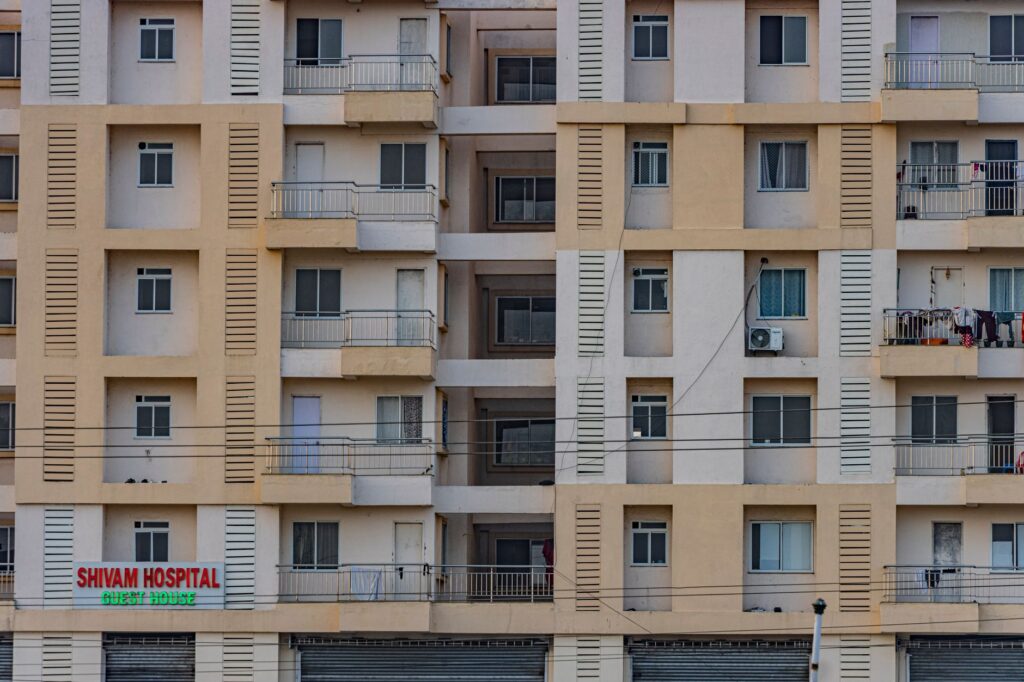
India’s residential property market is no longer moving as one. The affordable vs luxury housing debate has become central for homebuyers and investors as premium homes dominate sales while affordable launches shrink sharply.
Luxury housing, usually priced above ₹1 crore, is benefiting from HNI (high-net-worth individual) wealth, NRI (non-resident Indian) demand and the shift towards larger homes. Affordable housing, generally under ₹45 lakh, still serves India’s biggest end-user market, but it faces supply shortages, high land costs and uneven policy support.
Affordable vs luxury housing: India’s 2026 market split
The latest market data shows a clear divergence. A Reuters poll indicated that luxury homes priced above ₹1 crore accounted for 63% of total residential sales in 2025, up from 53% in 2024. Average home prices are expected to rise around 5% annually through 2028.
Affordable housing is moving in the opposite direction. According to industry estimates cited by Moneycontrol, affordable home sales fell 17% year-on-year in 2025, while new launches declined 28%. ANAROCK data reported that affordable housing made up just 6% of new launches in Q2 2026, compared with 52% in 2018.
This does not mean affordable homes have no demand. It means developers are prioritising projects with higher margins. Land, construction and compliance costs have made low-ticket projects less attractive unless supported by subsidies or cheaper land.
Affordable housing growth: demand, yields and policy support
Affordable housing remains critical for first-time buyers, salaried professionals and middle-income families. Buyers in this segment rely heavily on home loans, where the EMI (equated monthly instalment) burden directly affects demand. With home loan rates broadly in the 7.10% to 9.65% range, affordability is still a key constraint.
Government support can revive this segment. PMAY-U 2.0 (Pradhan Mantri Awas Yojana Urban) aims to help 1 crore additional urban families own homes over five years. If subsidy delivery improves and states release serviced land near employment hubs, affordable housing can regain momentum.
The segment also offers better rental logic. Lower entry cost and a wider tenant base often create stronger gross rental yields than luxury properties. In many urban markets, affordable and mid-income homes can generate around 4% to 5% gross yields. Net yields, after maintenance, taxes and vacancy, may fall to 2% to 3.5%, which investors should compare with FD returns and debt mutual funds.
Key growth triggers for affordable housing include:
- PMAY-U 2.0 subsidies and state-level housing incentives
- Tier-2 city job creation in IT, manufacturing and services
- Metro, ring road and expressway-led connectivity
- Stable RBI repo rate outlook and affordable home loan schemes
- Rising rental demand from young professionals and migrant workers
Cities such as Ahmedabad, Pune, Kolkata, Indore, Jaipur and Coimbatore remain important markets because home prices are still closer to local income levels.
Luxury housing growth: HNI, NRI and premium demand
Luxury housing currently has stronger market momentum. Sales of premium homes above ₹1 crore rose 14% year-on-year in 2025, while luxury sales surged across major cities in H1 2025. Prices have also moved faster. Industry data cited by Economic Times shows luxury homes appreciated around 40% between 2022 and 2025, compared with 26% for affordable homes.
The buyer profile explains this strength. HNIs, ultra-HNIs, business owners, senior executives and NRIs are less sensitive to small changes in interest rates. Many use own funds or borrow against financial assets. For them, property is not only shelter. It is a lifestyle asset, a wealth preservation tool and a portfolio diversifier.
NRI demand is especially strong in Mumbai, Bengaluru, Hyderabad and Delhi-NCR. Currency advantage, emotional connection with India and confidence in long-term economic growth have increased overseas participation. Branded residences, gated communities, concierge services and larger layouts are also attracting buyers who want premium amenities.
However, investors must avoid assuming that every expensive project is a good investment. Luxury property has lower rental yields, slower resale cycles and higher ticket-size risk. A ₹5 crore apartment may appreciate well in a prime Mumbai or Gurugram micro-market, but it can remain illiquid in an oversupplied suburb.
Real estate investment comparison: appreciation, rental yield and risk
For capital appreciation, luxury housing has a clear recent advantage. It has delivered stronger price growth, better developer focus and deeper HNI demand. Reports also project strong growth for India’s luxury residential market through 2030, supported by rising wealth and premiumisation.
For rental income and entry affordability, affordable housing scores better. A ₹35 lakh to ₹60 lakh property can attract a larger tenant pool and may be easier to sell than a high-ticket luxury apartment. This makes it more suitable for first-time property investors.
Risk also differs by segment. Affordable housing faces location risk, weak infrastructure in peripheral areas, developer execution issues and policy uncertainty. Luxury housing faces overvaluation, economic slowdown risk, NRI sentiment shifts and low liquidity.
Before buying in either segment, investors should check RERA (Real Estate Regulation and Development Act) registration, title clarity, developer track record, local demand, expected rent, maintenance costs and exit options. Avoid projects that promise unrealistic 6% to 8% rental yields without verified market evidence.
Affordable vs luxury housing: what this means for you
The affordable vs luxury housing choice depends on your capital, income stability and investment goal. First-time homebuyers and salaried professionals should prioritise affordable or mid-income homes in locations with jobs, schools, transport and realistic EMIs. Rental-income investors may also prefer affordable housing because the tenant base is broader.
HNIs and NRIs with a 7 to 10-year horizon can consider luxury housing in prime micro-markets of Mumbai, Delhi-NCR, Bengaluru, Hyderabad and Pune. They should focus on scarcity, developer quality and resale depth, not just amenities.
The bottom line is simple. Luxury housing may outperform on capital appreciation between 2026 and 2030, while affordable housing offers better entry cost, rental stability and social relevance. For most investors, the best strategy is not to chase the hottest segment. Buy the right property, at the right price, in the right micro-market.
Disclaimer: This article is for educational purposes only and is not personalised investment, legal or tax advice. Consult a financial adviser, property lawyer or tax professional before making a major real estate decision.

Bhavik Vaid
Bhavik Vaid writes on Indian markets, taxation, banking and personal finance for CADialogue. He covers RBI policy, GST and income-tax changes, mutual funds and market moves, translating them into practical guidance for retail investors, salaried professionals and business owners in India.


