No Insurance, No Fuel: How Vehicle Costs May Change
Motor insurance lapses may soon block fuel purchases in India. See how the Supreme Court push could raise ownership costs and what to check first.
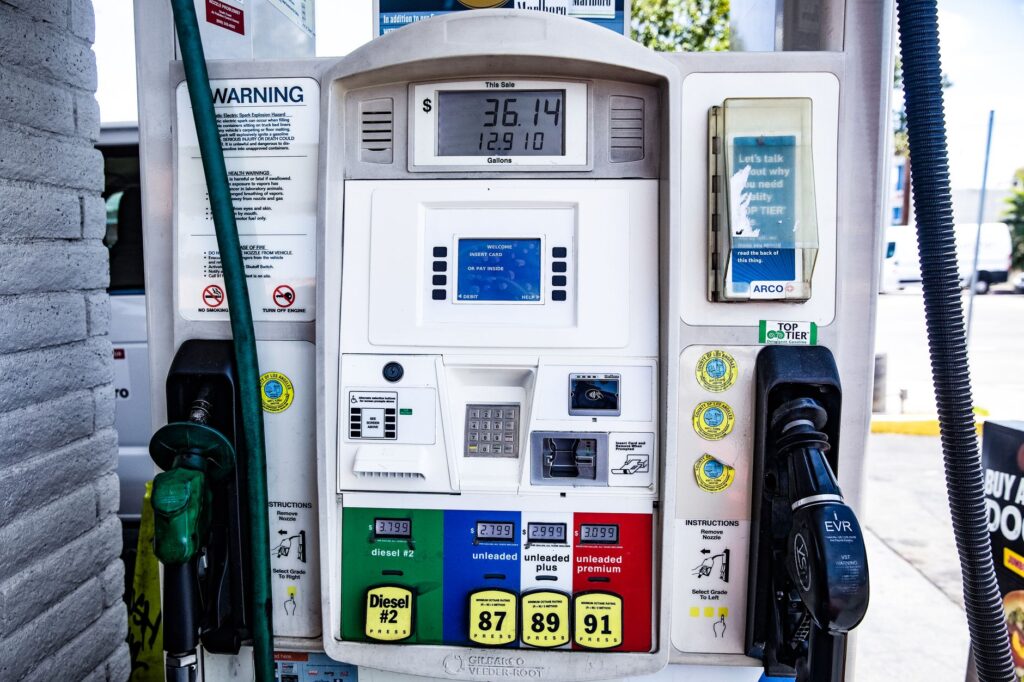
If motor insurance renewal has been treated as a low-priority annual chore, that habit may soon become expensive in a very visible way. The Supreme Court has proposed a “no insurance, no fuel” pilot and automatic e-challans for non-compliance, a push that could make lapsed third-party cover harder to ignore for car and two-wheeler owners.
Table of Contents
- Why motor insurance enforcement is tightening now
- What the Supreme Court push could change for motor insurance
- Why this matters for Indian investors and vehicle owners
- What to watch next
- Expert Insight
- Frequently Asked Questions
- Key Takeaways
Why motor insurance enforcement is tightening now
India has long had a gap between what the law expects and what many vehicle owners actually do. Third-party motor insurance is not a luxury add-on. It is the basic protection meant to cover liability arising from damage, injury or loss caused to another person or property. Yet renewal discipline often weakens once a vehicle gets older, changes hands, moves to another city, or stops being used daily.
That is the behavioural problem behind the proposed enforcement shift. A policy that exists only on paper cannot protect accident victims, and a mandatory product loses meaning if enforcement depends mainly on manual checks. The idea of linking fuel access with insurance status changes the pressure point. Instead of discovering non-compliance only after an accident or during a traffic stop, the system could identify a lapse at a routine transaction point.
For households, this turns motor insurance from a passive document into an active ownership requirement. The moment fuel purchase becomes linked to compliance, renewal moves closer to the front of the personal finance calendar, alongside loan EMIs, utility bills, tax filings and health insurance premiums. That changes behaviour because inconvenience is a powerful enforcement tool.
The capital-market backdrop also matters. As of 2026-08-06, the Sensex is at 78,853.15, up +0.35% today, while the Nifty 50 is at 24,645.75, up +0.09% today. The S&P 500 is at 7,723.55, down -0.17% today, and USD/INR is at ₹95.22. When household budgets already face moving parts from fuel, borrowing costs and currency-linked inflation pressures, a compliance-linked ownership cost cannot be dismissed as a minor paperwork issue.
Takeaway: the proposed shift is not only about insurance; it is about making vehicle ownership compliance impossible to postpone.
What the Supreme Court push could change for motor insurance
The core proposal is simple in design but potentially significant in impact: deny fuel to uninsured vehicles under a pilot framework and enable automatic e-challans for non-compliance. The Supreme Court push also comes with attention on third-party cover for new vehicles, reinforcing the policy view that basic liability protection must travel with vehicle ownership rather than depend on voluntary discipline.
This is not the same as a premium hike announcement. The available source material does not provide any revised premium, penalty amount, implementation date, city list, fuel-pump protocol or insurer-specific financial estimate. So the right way to read this development is not “insurance cost has gone up today.” The better reading is: the cost of non-renewal may rise sharply if enforcement becomes embedded into everyday vehicle use.
That difference matters. A vehicle owner who renews on time pays the required premium and moves on. A vehicle owner who delays renewal may face operational friction: inability to refuel under the pilot, an automatic challan, or both. What was once a back-office lapse could become a real-world disruption.
Here is how the current behaviour model compares with the proposed enforcement approach:
| Parameter | Current practical reality | Proposed enforcement direction |
|---|---|---|
| Renewal trigger | Often driven by reminders, agent calls, app alerts or accident risk awareness | Could be linked to fuel access and automated compliance checks |
| Visibility of lapse | May remain unnoticed by the owner for some time | Could become visible during routine vehicle use |
| Enforcement style | Often dependent on physical checks or post-event verification | Could shift toward system-led e-challans |
| Owner behaviour | Renewal may be postponed if vehicle usage is low | Renewal urgency may rise even for occasional-use vehicles |
| Financial impact | Premium is seen as an annual ownership cost | Lapsed motor insurance may create immediate inconvenience and possible penalties |
| Market implication | Persistency depends heavily on reminders and distribution | Renewal discipline could improve if compliance friction increases |
The broader change is psychological. Insurance is usually bought because people fear loss. Mandatory insurance is renewed because people fear non-compliance. If fuel access joins the enforcement chain, the fear of non-compliance becomes more immediate than the abstract fear of an accident.
For insurers, this could improve renewal behaviour in the third-party segment, although the source material does not provide any company-specific numbers or earnings impact. For intermediaries and digital platforms, the opportunity lies in making renewal easy before the customer faces a failed transaction at a fuel station. For vehicle owners, the task is simpler: do not wait for enforcement to remind you.
The issue is especially relevant for two-wheelers and older vehicles, where owners can underestimate the importance of maintaining cover once the vehicle’s resale value declines. But liability risk does not decline simply because a vehicle is old. A low-value vehicle can still create a high-value claim if it causes injury or damage.
There is also an important distinction between own-damage protection and third-party cover. Third-party cover addresses liability toward others. Own-damage protection protects the insured vehicle itself, subject to policy terms. The proposed enforcement push is centred on mandatory compliance; it should not be confused with a comprehensive motor insurance buying decision, which depends on vehicle value, usage, parking risk, theft exposure and the owner’s ability to absorb repair costs.
Could this make motor insurance more “non-discretionary” in the eyes of consumers? Yes. Not because the underlying legal requirement is new, but because the enforcement architecture may become harder to bypass.
Takeaway: the proposal does not change the logic of motor insurance; it changes the consequences of ignoring it.
Why this matters for Indian investors and vehicle owners
For retail investors, this story sits at the intersection of household budgeting, financial services and compliance-led behaviour. Motor insurance is not a listed-market theme in isolation; it connects to insurers, auto sales, vehicle finance, fuel retailing, digital payments, data infrastructure and state enforcement systems. The immediate effect falls on vehicle owners, but the behavioural signal is larger: India is moving more routine compliance into digital rails.
That has a personal finance impact. Many families budget for the visible costs of vehicle ownership: fuel, servicing, parking, loan repayment and occasional repairs. Insurance renewal is often treated as a reminder-based expense, not a hard monthly provisioning item. If enforcement tightens, households will need to budget for motor insurance with the same seriousness as they budget for EMIs and school fees. The price of delay may no longer be theoretical.
Investors should also read the macro environment carefully. The RBI repo rate is 5.25%, which keeps borrowing cost sensitivity relevant for consumers with auto loans or other floating-rate liabilities. USD/INR at ₹95.22 also matters because currency movements can affect imported inputs, energy costs and inflation expectations over time. When fuel and financing already influence vehicle ownership economics, insurance compliance becomes another non-negotiable layer.
Market sentiment today is mixed across regions. Indian benchmarks are positive, with the Sensex at 78,853.15 and the Nifty 50 at 24,645.75, while the S&P 500 is lower at 7,723.55. For Indian investors, the message is not to trade this headline blindly. The better approach is to examine whether insurers, auto-linked lenders, and digital platforms gain from higher renewal discipline over time, and whether margins, claims ratios and persistency actually improve according to future company filings.
SEBI‘s role matters indirectly here because listed insurance companies, financial services firms and auto-linked businesses must disclose material information to stock exchanges such as NSE and BSE under the securities framework. Investors should rely on exchange filings, earnings commentary and audited financial statements rather than social-media claims about sudden profit windfalls. For business owners with vehicle fleets, ICAI-style accounting discipline becomes relevant too: insurance renewals should be tracked as a compliance cost, not discovered during a disruption.
There is a behavioural lesson as well. Retail investors often separate “market decisions” from “household decisions.” That is a mistake. A missed insurance renewal, a delayed tax filing, an ignored loan reset, or an underfunded emergency corpus can damage wealth creation just as surely as a poor stock pick. If a family owns vehicles, motor insurance renewal discipline is part of risk management.
The proposed model may also push vehicle owners to compare policies more carefully before renewal. That does not mean buying the cheapest policy blindly. It means checking coverage, claim process, garage network, add-ons if relevant, deductibles, exclusions, and whether the policy meets mandatory compliance requirements. A cheap policy that leaves confusion at claim time is not always cheap in economic terms.
For investors tracking financials, the key is to distinguish premium growth from profitable growth. Higher renewals may support top-line momentum, but claims experience, acquisition costs and regulatory pricing will decide whether shareholders benefit. Do not assume that every compliance push automatically creates outsized profit for every insurer.
Takeaway: for households, motor insurance becomes a budgeting priority; for investors, it becomes a compliance-driven financial-services signal to track, not a one-day trading trigger.
What to watch next
The next phase will decide whether this remains a strong policy idea or becomes a practical enforcement system. The most important signals will come from implementation design, data integration, consumer communication and market disclosures.
Pilot location and operating model
Watch whether authorities identify where the pilot will run and how fuel stations will verify insurance status. The operational question is critical: will verification happen through vehicle registration data, an insurance database, a QR-based workflow, or another digital mechanism? A policy can be strong on paper, but execution decides compliance.
The retail takeaway is direct: once the pilot details emerge, owners should check whether their vehicle records, mobile numbers and insurance documents are updated across relevant systems.
E-challan integration
Automatic e-challans can change enforcement behaviour because they reduce dependence on physical stops. Investors should watch whether the system can identify non-compliance accurately and avoid errors for owners who have valid cover. Consumer trust will depend on grievance redressal as much as enforcement.
The key question: will vehicle owners get enough warning before penalties or fuel restrictions apply?
Insurer renewal communication
Insurers and intermediaries may increase renewal reminders if the pilot moves forward. That could include app alerts, SMS reminders, call-centre outreach and dealer-led communication. But customers should not depend only on reminders; they should store policy expiry dates in their own financial calendar.
For personal finance planning, this is a simple improvement: treat motor insurance expiry like a tax deadline, not like a marketing message.
Impact on used vehicles and ownership transfers
Used-vehicle buyers need to pay special attention. Insurance status, ownership transfer and vehicle records must align. If records are outdated, a buyer may discover problems only when enforcement systems flag the vehicle.
The practical takeaway: never buy or sell a vehicle without checking insurance continuity and documentation handover.
Stock-market disclosures
Listed insurers and financial-services companies may comment on renewal trends in future filings or earnings calls. Investors should wait for such disclosures rather than extrapolate from headlines. NSE and BSE filings, company annual reports and audited statements carry more weight than market chatter.
The market takeaway is clear: track verified disclosures, not assumptions.
Takeaway: implementation detail will decide whether the proposal becomes a smooth compliance tool or a friction-heavy consumer pain point.
Expert Insight
Insurance-sector analysts generally view enforcement-linked renewal as a structural positive for compliance, but not an automatic profit guarantee for every insurer. Their core argument is that motor insurance renewal urgency can improve when the customer faces immediate service denial or automated challan risk, yet shareholder outcomes will still depend on pricing discipline, claims experience, distribution costs and regulatory oversight. In other words, the policy direction may expand compliance, but investors must still analyse company fundamentals with the same rigour they apply to any financial stock.
Takeaway: better compliance can support the sector, but investors should wait for evidence in filings before pricing in durable earnings gains.
Frequently Asked Questions
What is the Supreme Court “no insurance, no fuel” proposal?
The proposal is to run a pilot under which uninsured vehicles may be denied fuel and non-compliance may trigger automatic e-challans. The aim is to tighten enforcement of mandatory third-party motor insurance. The available source material does not specify the pilot location, rollout date or penalty amount.
Will I be unable to buy fuel if my motor insurance has expired?
Under the proposed pilot, denial of fuel to uninsured vehicles is part of the enforcement idea. Whether this affects you will depend on where and how the pilot is implemented. Until official implementation details are available, the safest action is to renew motor insurance before expiry.
Is third-party cover enough for my car or two-wheeler?
Third-party cover addresses mandatory liability protection, but it does not necessarily protect your own vehicle against damage. Whether you need broader motor insurance depends on your vehicle’s value, usage, repair affordability and risk exposure. Do not choose purely on premium; understand what the policy covers and excludes.
Will this make motor insurance premiums more expensive?
The available source material does not provide any premium increase linked to the proposal. The bigger immediate change is likely to be renewal urgency and compliance pressure, not a confirmed change in premium levels. Premium decisions should be checked through official insurer quotes and policy documents.
Should investors buy insurance stocks because of this proposal?
Investors should avoid reacting to the headline alone. Stronger motor insurance enforcement may support renewal behaviour, but listed companies still need to show improvement through filings, earnings commentary and audited numbers. Use NSE and BSE disclosures, not speculation, before making any investment decision.
Takeaway: the proposal matters, but vehicle owners and investors should act on verified implementation details, not rumours.
Key Takeaways
- Motor insurance renewal may become harder to postpone if fuel access and e-challans are linked to compliance.
- The Supreme Court-backed proposal focuses on enforcement of mandatory third-party cover, not a confirmed premium increase.
- Vehicle owners should check policy expiry, registration details and ownership records before enforcement becomes more digital.
- Families should treat motor insurance as a core personal finance obligation, not an optional annual reminder.
- Used-vehicle buyers must verify insurance continuity before completing a transaction.
- Investors should track official disclosures by listed insurers and financial firms on NSE and BSE rather than trade on assumptions.
- The real cost shift is not only the premium; it is the potential inconvenience and compliance risk of driving uninsured.
Disclaimer: This article is for informational purposes only and does not constitute investment advice. Please consult a SEBI-registered financial advisor before making investment decisions.
Sources & references

Bhavik Vaid
Bhavik Vaid writes on Indian markets, taxation, banking and personal finance for CADialogue. He covers RBI policy, GST and income-tax changes, mutual funds and market moves, translating them into practical guidance for retail investors, salaried professionals and business owners in India.


