Rupee at 100 per dollar: Impact on inflation, EMIs and investors
The rupee nearing ₹100 against the US dollar would be important, but not automatically a crisis. Oil prices, Fed policy, capital flows, inflation and RBI action will decide the impact.
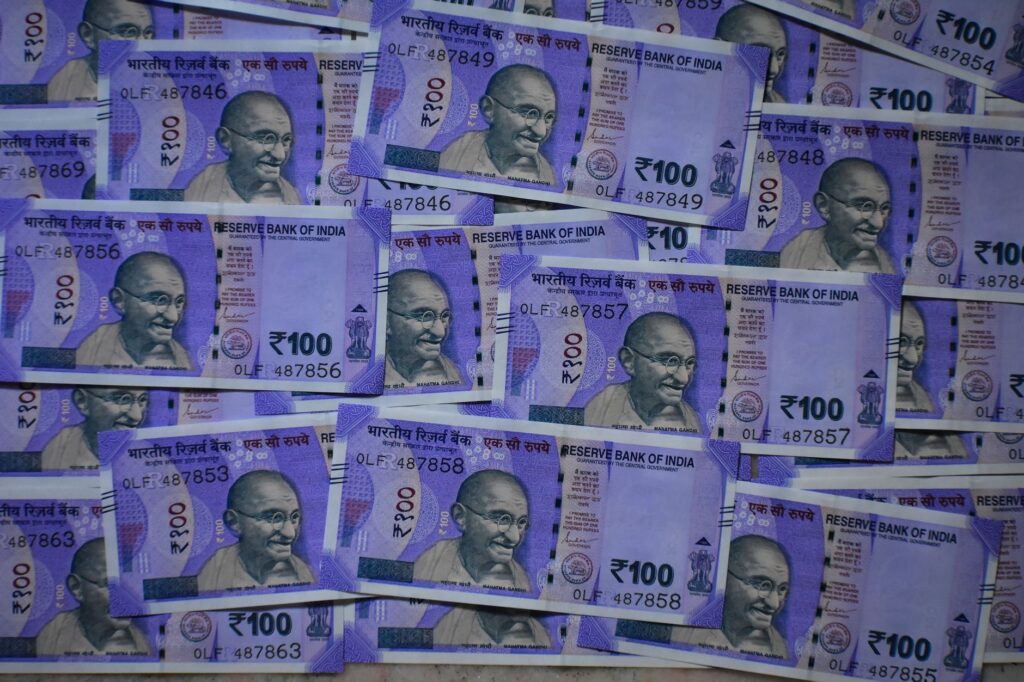
The rupee at 100 per dollar is no longer an impossible market talking point. With the rupee around ₹95.46 against the US dollar on 25 August 2026, the move to ₹100 would need only about 4.8% further depreciation.
That does not mean India is headed for a currency crisis. It means investors, importers, exporters, students and households should understand the triggers and prepare for volatility.
Rupee at 100 per dollar is possible, not inevitable
The maths is simple. From ₹95.46, a move to ₹100 is a depreciation of roughly 4.8%. In currency markets, that is meaningful but not extraordinary, especially during periods of high crude prices, dollar strength or global risk aversion.
The more important question is why the rupee reaches that level. A brief spike caused by an oil shock or global sell-off is different from a sustained depreciation caused by high inflation, weak exports and persistent current-account pressure.
Recent market context matters. Moneycontrol reported that the rupee closed near ₹95.46 per dollar on 25 August 2026, while FRED showed a daily USD/INR reading of ₹95.70 on 21 August 2026. Such small differences can arise due to timing, market conventions and reference rates.
The RBI does not usually defend one permanent exchange-rate number. It aims to manage excessive volatility through spot and forward market operations, liquidity tools and policy signalling. The RBI’s exchange-rate information also notes that reference rates are disseminated by Financial Benchmarks India Private Limited, or FBIL, not fixed as a guaranteed official price.
USD/INR drivers: Oil, Fed rates and capital flows
Several factors could push the rupee at 100 per dollar from scenario to reality.
Crude oil is the biggest immediate risk. India imports a large part of its energy requirement and pays for much of it in dollars. Reuters reported Brent crude around $88.58 per barrel on 25 August 2026 after a sharp daily fall. Even after such declines, oil remains a major pressure point for India’s import bill.
US monetary policy is another key driver. If the Federal Reserve keeps rates higher for longer, dollar assets become more attractive. Foreign investors may then reduce exposure to emerging markets, including India. The Federal Reserve’s July 2026 policy communication showed continued concern over inflation, keeping dollar strength in focus.
India’s own interest-rate cushion is not automatic protection. The RBI kept the repo rate at 5.25% in August 2026, while the US federal-funds range was 3.50% to 3.75%. But investors also consider expected rupee depreciation, hedging costs, inflation, liquidity and political risk.
External balances also matter. Reuters reported India’s July 2026 merchandise trade deficit at about $31.98 billion, with imports exceeding exports sharply. Services exports and remittances provide a cushion, but a wide goods deficit creates steady dollar demand. The Hindu reported that India’s current-account deficit was about $6.2 billion in June 2026, compared with a surplus a year earlier.
Foreign portfolio investment, or FPI, can support the rupee when overseas investors buy Indian equities and bonds. But FPI flows can reverse quickly. That is why stock-market inflows on NSE and BSE should be watched over several weeks, not just one session.
Rupee depreciation impact on inflation, gold and businesses
A weaker rupee raises the rupee cost of imported goods and services. This can affect fuel, electronics, fertilisers, medical equipment, software subscriptions, overseas travel and foreign education.
Inflation is the main household risk. If oil, freight and imported components become costlier, companies may pass on part of the increase to consumers. This can keep CPI inflation above the RBI’s comfort zone and reduce the scope for rate cuts. In turn, bank lending rates, FD rates and EMI trends may remain sensitive to RBI policy.
Gold may also react. If the global dollar price of gold is unchanged, a weaker rupee generally lifts domestic gold prices. But local prices also depend on import duty, GST, premiums, demand and global gold movement.
Exporters are not automatic winners. IT services, pharma, textiles and other dollar-earning sectors may receive more rupees for every dollar of revenue. But companies that import raw materials, have foreign-currency debt or have already hedged their exposure may see limited benefit.
For example, a $5,000 overseas education payment costs about ₹4,77,300 at ₹95.46. At ₹100, it costs ₹5,00,000 before bank charges and taxes. A $50 monthly subscription moves from about ₹4,773 to ₹5,000. A $10,000 export receipt rises from about ₹9,54,600 to ₹10,00,000, but profit improves only if costs do not rise similarly.
Rupee at 100 per dollar: Practical steps for investors
Investors and businesses should treat the rupee at 100 per dollar as a risk-management scenario, not a certainty. Panic decisions can be expensive, especially in currency, gold and overseas investments.
Practical steps include:
- Budget foreign education, travel and business payments using more than one USD/INR assumption.
- Review international subscriptions, card conversion spreads and bank forex charges.
- Match dollar income with dollar expenses wherever possible.
- Avoid buying dollars or gold only because of a headline exchange-rate level.
- Businesses should calculate net foreign-currency exposure, not just gross imports or exports.
- Use authorised banks, regulated forex providers and proper documentation.
- Consult a CA or treasury adviser for hedging, foreign loans, export receipts and tax treatment.
Retail investors should also examine portfolio exposure. Export-heavy stocks may benefit from rupee weakness, while airlines, oil marketing companies, import-heavy manufacturers and firms with unhedged foreign debt may face pressure. Mutual fund investors should avoid switching schemes based only on currency headlines.
What rupee weakness means for you
The rupee at 100 per dollar would be psychologically important, but it would not by itself prove that the Indian economy is in crisis. India has growth momentum, services exports, remittances and sizeable foreign-exchange reserves. Reuters reported reserves near $716.9 billion in August 2026, which gives the RBI a meaningful buffer against disorderly market moves.
Still, reserves cannot permanently override fundamentals. Watch Brent crude, US Fed signals, FPI flows, India’s trade deficit, CPI inflation, RBI policy and forex reserves. These indicators will show whether rupee weakness is temporary volatility or a deeper external-sector challenge.
For households, the message is clear. Plan dollar-linked expenses early, avoid panic trades and understand your real exposure. For businesses, stress-test cash flows at ₹100 and beyond. Currency risk is manageable, but only when it is measured before it hits the bank account.
Frequently Asked Questions
Is rupee at 100 per dollar a currency crisis for India?
No, the article says rupee at 100 per dollar is possible but not inevitable, and does not automatically mean a currency crisis. From ₹95.46 on 25 August 2026, it would need about 4.8% further depreciation, which is meaningful but not extraordinary in volatile markets.
What can push the rupee to 100 against the US dollar?
High crude oil prices, US dollar strength, global risk aversion, capital outflows and India’s external deficit can push the rupee towards 100. The article highlights India’s energy imports, higher-for-longer US rates, a July 2026 merchandise trade deficit of about $31.98 billion, and changing FPI flows as key triggers.
How will a weaker rupee affect inflation in India?
A weaker rupee can raise inflation by making imported goods and services costlier in rupee terms. The article says fuel, electronics, fertilisers, medical equipment, software subscriptions, overseas travel and foreign education can become more expensive, while higher oil, freight and component costs may be passed on to consumers.
Will rupee depreciation increase home loan EMIs?
Rupee depreciation can affect EMIs indirectly if it keeps inflation high and limits RBI rate cuts. The article says higher imported costs can keep CPI inflation above the RBI’s comfort zone, making bank lending rates, FD rates and EMI trends sensitive to RBI policy decisions.
Does RBI fix the rupee-dollar exchange rate?
No, the RBI does not usually defend one permanent exchange-rate level for the rupee. The article says it manages excessive volatility through spot and forward market operations, liquidity tools and policy signalling, while reference rates are disseminated by FBIL rather than guaranteed as an official fixed price.
Sources & references

Bhavik Vaid
Bhavik Vaid writes on Indian markets, taxation, banking and personal finance for CADialogue. He covers RBI policy, GST and income-tax changes, mutual funds and market moves, translating them into practical guidance for retail investors, salaried professionals and business owners in India.


