Rupee Leads Asia as Crude Cools and Dollar Weakens
Rupee rate today signals relief for India as crude cools and the dollar weakens. See what the move means for importers, RBI, investors and markets.
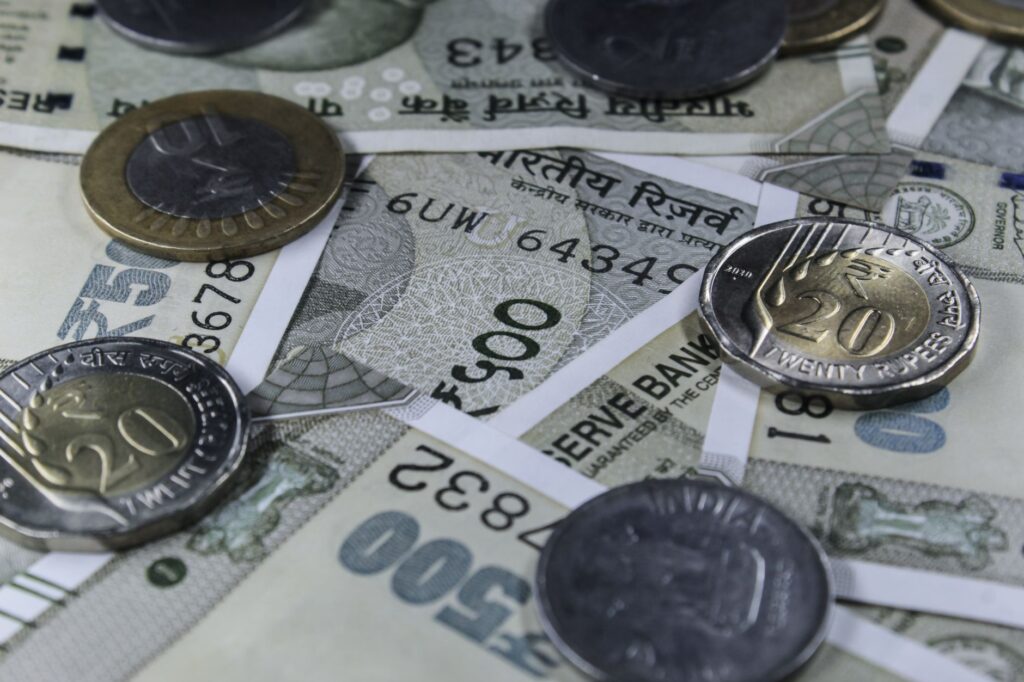
A recovering rupee, helped by softer crude oil, a weaker dollar, supportive foreign flows and easing bond yields, is giving India’s markets a macro breather even as equities remain cautious. For retail investors, the rupee dollar rate matters through fuel inflation, import-heavy company margins, foreign borrowing costs, RBI actions and overseas investor sentiment.
The rupee has staged a sharp recovery just as crude oil cools and the dollar loses momentum, giving India’s macro trade a timely breather. USD/INR is at ₹95.40, while The Hindu BusinessLine reported that the domestic currency closed at 95.41 on Tuesday, compared with 95.68 a week ago. That may look like a small move on a screen, but for importers, foreign borrowers, equity investors and the RBI, it matters.
Table of Contents
- Why the Rupee Is Back in Focus
- Rupee Rally Gets Support From Crude Dollar and Flows
- What the Rupee Move Means for Indian Retail Investors
- What to Watch Next
- Expert Insight
- Frequently Asked Questions
- Key Takeaways
Why the Rupee Is Back in Focus
The rupee has returned to the centre of India’s market conversation because several macro variables are moving in the same direction at the same time. Crude oil is softer, the dollar has weakened from recent levels, foreign flows remain supportive, and bond yields have eased. For a country that imports a large part of its energy requirement, this combination immediately improves the market mood.
The move also comes at a sensitive point for Indian assets. Domestic equities are not surging despite the currency relief. The Sensex is at 77,472.94, down -0.24% today, while the Nifty 50 is at 24,207.75, down -0.52% today. Global cues are also soft, with the S&P 500 at 7,668.45, down -0.12% today. So the currency market is offering comfort at a time when equity markets are still cautious.
Why does a stronger rupee matter so much? Because USD INR is not merely a forex quote. It influences fuel inflation, imported inputs, external debt servicing, hedging costs, corporate margins, RBI reserve management, foreign investor confidence and sentiment toward India’s current account. A move in the rupee can alter earnings expectations for import-heavy companies and change the way overseas investors view local assets.
The latest recovery follows a period in which the currency had been stable before breaking out in the final trading hours of Tuesday, according to The Hindu BusinessLine. The report said the rupee made a sharp recovery after having been stable for a week. That change in behaviour is what has caught the market’s attention.
The takeaway: the rupee is not moving in isolation; it is reacting to a better mix of crude oil, dollar weakness, foreign inflows and RBI reserve dynamics.
Rupee Rally Gets Support From Crude Dollar and Flows
The strongest immediate support for the rupee comes from crude oil. The Hindu BusinessLine reported that crude oil prices declined over 2 per cent on Tuesday, aiding the currency’s recovery. Brent crude oil currently stands at $89.50/barrel; it is down nearly 5 per cent so far this week, after gaining 6.6 per cent last week.
That reversal matters for India. When crude oil rises, India’s import bill pressure increases, and the market begins to price in potential stress on the current account and inflation. When crude cools, the opposite happens: traders become less worried about dollar demand from oil importers, and the rupee gets breathing space.
The dollar leg is equally important. The dollar index lost 0.8 per cent last week and closed at 98.84 on Friday, according to The Hindu BusinessLine. It has now inched higher to 99, and the report said it is likely to rise to the 99.40-99.50 band, which can cap the rally. A softer dollar usually eases pressure on emerging-market currencies, including the rupee, because global investors become less defensive and dollar funding conditions feel less tight.
Foreign flows are another key pillar. The report said net FPI inflows stood at about $693 million over the past week, according to NSDL data, taking cumulative inflows in August so far to around $2.4 billion. This matters because foreign portfolio flows create dollar supply in the domestic market. When overseas investors buy Indian assets, they bring in dollars and convert them into rupees, which helps the currency.
There is also a special source of dollar liquidity. Dollar inflows have received an additional boost from the special USD-INR swap facility linked to FCNR(B) deposits, with inflows amounting to around $65 billion ahead of August 31, the revised deadline. That is a large macro cushion, and it changes how traders think about immediate currency stress.
India’s reserve position also appears stronger. The Hindu BusinessLine reported that India’s foreign exchange reserves jumped nearly $10 billion in the week ended August 14 to $716.9 billion, indicating that the RBI has been rebuilding its reserve buffer. This matters because a higher reserve buffer gives the central bank more room to manage disorderly currency moves, even if it does not aim to defend a specific level.
Here is the current macro dashboard from the verified market data and source material:
| Indicator | Latest verified reading | Market implication |
|---|---|---|
| USD/INR | ₹95.40 | Rupee trades stronger than the recent close cited in source material |
| Rupee close on Tuesday | 95.41 | Sharp recovery from 95.68 a week ago |
| Brent crude oil | $89.50/barrel | Softer crude oil supports India’s external account sentiment |
| Brent move this week | down nearly 5 per cent | Relief after gaining 6.6 per cent last week |
| Net FPI inflows over the past week | about $693 million | Supports dollar supply into Indian markets |
| Cumulative FPI inflows in August so far | around $2.4 billion | Reinforces positive foreign flow backdrop |
| FCNR(B)-linked swap inflows | around $65 billion | Adds to dollar liquidity ahead of August 31 |
| Forex reserves | $716.9 billion | RBI reserve buffer has strengthened |
| RBI repo rate | 5.25% | Domestic policy rate backdrop remains steady in this dataset |
| Sensex | 77,472.94 | Equity market trades lower today |
| Nifty 50 | 24,207.75 | Broad market sentiment remains cautious |
The technical picture also shows why traders are watching the next move closely. The Hindu BusinessLine said the rupee broke its 95.56-95.76 range on the upside on Tuesday, and support at 95.80 held very well. The report said near-term resistance is at 95.30, which can be tested this week if the currency sustains higher. A break above 95.30 can then take the rupee higher to 94.90, while failure to breach 95.30 can take it back to 95.75-95.80.
But there are risks. The same report warned that uncertainty surrounding the Strait of Hormuz continues to pose an upside risk to oil prices. It also noted that the US has broadened sanctions on Iran, targeting sectors including aviation, digital assets, gold, technology and shipping, besides several individuals and vessels. These are not small footnotes. They are the kind of geopolitical risks that can quickly reverse the crude oil comfort trade.
For now, the rupee is getting help from a rare alignment: softer crude oil, supportive flows, a weaker dollar tone and a stronger reserve buffer. Bond yields have also eased, adding another layer of relief for domestic markets because lower yields reduce pressure on borrowing costs and improve sentiment toward fixed-income assets. The question is simple: can this mix hold if oil rebounds or the dollar strengthens again?
The takeaway: the rupee’s recovery is credible because it has support from multiple macro channels, but the move still depends heavily on crude oil and the dollar.
What the Rupee Move Means for Indian Retail Investors
For Indian retail investors, the rupee is not an abstract macro variable. It flows directly into portfolios through equities, debt funds, gold, international funds, travel expenses, education costs and imported inflation. When USD INR rises sharply, import-heavy businesses face cost pressure, overseas education becomes more expensive, and global investing outcomes change after currency conversion. When the rupee recovers, some of that pressure eases.
Equity investors should first look at sector exposure. Import-dependent sectors generally prefer a stable or stronger rupee because their dollar costs become less painful. Export-oriented companies may not welcome a sharp rupee recovery because their dollar revenues translate into fewer rupees. This does not mean investors should buy or sell a sector mechanically. It means currency sensitivity should become part of stock selection, especially when USD INR remains a key macro risk.
The current equity reaction is mixed. The Sensex is at 77,472.94, down -0.24% today, and the Nifty 50 is at 24,207.75, down -0.52% today. That tells investors something important: the rupee’s recovery is helpful, but it is not enough by itself to lift the entire market. Earnings expectations, global risk appetite, domestic liquidity and valuation comfort still matter.
Debt investors should watch bond yields closely. The research brief notes that bond yields have eased, and that gives fixed-income markets relief. When yields ease, existing bond prices generally get support. For investors in debt mutual funds, target maturity products or portfolios with duration exposure, the direction of yields can matter as much as the direction of the rupee. The RBI repo rate is at 5.25%, so the policy backdrop remains a central reference point for debt market pricing.
Gold investors face a more complicated setup. A weaker dollar and geopolitical risks can support global gold sentiment, but a stronger rupee can reduce the domestic landed price impact. Investors should avoid treating rupee appreciation as an automatic negative or positive for gold. Gold remains influenced by global risk appetite, dollar moves, inflation expectations and domestic currency conversion.
International fund investors should also pay attention. If an Indian investor owns overseas assets, a weaker rupee boosts rupee returns when foreign holdings are converted back, while a stronger rupee can reduce those translated gains. Today, global equities are soft, with the S&P 500 at 7,668.45, down -0.12% today, and the NASDAQ at 26,075.62, down -0.29% today. Currency conversion may soften or amplify portfolio outcomes depending on the direction of USD INR.
There is a regulatory angle as well. The RBI remains central to currency stability through liquidity management, reserves and market operations. SEBI‘s disclosure framework matters for listed companies because investors need clarity on forex exposure, hedging policies and imported cost pressure. NSE and BSE price discovery reflects these expectations in real time. For companies with meaningful foreign currency exposure, auditor-reviewed financial statements and accounting treatment also help investors understand whether currency movements are flowing through earnings, reserves or hedging lines.
Retail investors should not chase the rupee move as a standalone trade unless they understand currency risk. Instead, they should use it as a signal for portfolio review:
- Check whether equity holdings benefit from a stronger or weaker rupee.
- Review debt fund duration if bond yields continue to ease.
- Reassess international fund returns after currency translation.
- Track import-heavy companies for margin relief.
- Watch exporters for possible translation headwinds.
- Avoid assuming that lower crude oil automatically means lower market volatility.
- Keep emergency goals insulated from currency-linked risk.
What should a retail investor do today? Not panic. Not extrapolate. A currency recovery reduces stress, but it does not remove risk. Crude oil can rebound, the dollar can regain strength, and foreign flows can turn more cautious if global risk appetite deteriorates.
The takeaway: the rupee recovery is positive for sentiment, but investors should translate it into sector analysis, debt allocation review and currency-aware portfolio decisions.
What to Watch Next
The next phase for the rupee depends on whether the current supportive mix survives. The market has received relief from softer crude oil, foreign inflows, dollar weakness and easing bond yields, but currency markets can turn quickly when geopolitics, oil or global rates shift. Investors should track a few clear signals instead of reacting to every tick in USD INR.
Brent crude oil direction
Crude oil remains the biggest swing factor for India’s currency comfort. Brent crude oil currently stands at $89.50/barrel, and The Hindu BusinessLine reported that it is down nearly 5 per cent so far this week after gaining 6.6 per cent last week. If crude oil stays soft, the rupee gets support through lower import-related dollar demand. If geopolitical risks push oil higher again, the rupee may lose part of its current advantage.
Dollar index behaviour
The dollar index closed at 98.84 on Friday after losing 0.8 per cent last week, and it has now inched higher to 99. The Hindu BusinessLine said the 99.40-99.50 band can cap the rally, while a breakout of 99.50 can bring back bullishness. For Indian investors, this matters because a stronger dollar can pressure emerging-market currencies, tighten financial conditions and influence foreign flow behaviour.
RBI reserve management
India’s foreign exchange reserves jumped nearly $10 billion in the week ended August 14 to $716.9 billion, according to the source report. That signals reserve rebuilding. If the RBI continues to absorb incoming dollars to strengthen the buffer, the rupee’s appreciation may remain contained even when flows are positive. This is not negative; it reflects policy preference for stability over sharp currency moves.
Foreign portfolio flows
Net FPI inflows stood at about $693 million over the past week, taking cumulative inflows in August so far to around $2.4 billion. These flows support the rupee by improving dollar supply. But foreign flows are sensitive to global risk appetite, US market direction, dollar strength and India valuation comfort. Sustained inflows can help the rupee hold gains; outflows can quickly change the tone.
Technical levels in USD INR
The Hindu BusinessLine said the rupee can test 95.30 in the near term, with the expected trading range for the week at 95.30-95.80. It also said a break above 95.30 can take the rupee to 94.90, while failure to breach 95.30 can push it back to 95.75-95.80. Traders will treat these levels as markers, but long-term investors should use them as risk signals, not as trading instructions.
The takeaway: the rupee’s next move will be decided by crude oil, the dollar index, RBI reserve action, foreign flows and whether USD INR sustains beyond key technical zones.
Expert Insight
Currency analysts at brokerages generally view the rupee’s recovery as a macro relief move rather than a clean trend reversal. Their core argument is that softer crude oil and positive foreign flows improve the near-term balance for India, while RBI reserve rebuilding can limit excessive appreciation. In practical terms, that means the rupee may remain supported when crude oil is calm and the dollar is soft, but the upside could be capped if the central bank uses dollar inflows to rebuild reserves. For investors, the expert reading is clear: treat the rupee move as a reduction in macro stress, not as a guarantee that volatility has ended.
The takeaway: professional currency desks see support for the rupee, but they are not ignoring oil, geopolitics or RBI intervention risk.
Frequently Asked Questions
Why is the rupee rising against the dollar?
The rupee is gaining support from softer crude oil, positive foreign flows and a weaker dollar tone. The Hindu BusinessLine reported that crude oil prices declined over 2 per cent on Tuesday, while net FPI inflows stood at about $693 million over the past week. USD/INR is currently at ₹95.40.
Is a stronger rupee good for the Indian stock market?
A stronger rupee is generally helpful for import-heavy companies and for overall macro sentiment. But it can be less favourable for exporters because foreign currency revenues translate into fewer rupees. The Sensex is at 77,472.94, down -0.24% today, and the Nifty 50 is at 24,207.75, down -0.52% today, so the equity market is still cautious despite currency relief.
How does crude oil affect the rupee?
India’s currency is sensitive to crude oil because oil imports create dollar demand. When crude oil falls, pressure on the rupee usually eases because the market expects less stress on the import bill. Brent crude oil currently stands at $89.50/barrel, and softer crude oil has helped the latest rupee recovery.
Should retail investors change their portfolio because USD INR has moved?
Retail investors should not make abrupt changes only because USD INR has moved. They should review which holdings benefit from a stronger rupee and which are hurt by it. Debt investors should also track bond yields, while international fund investors should consider currency translation effects.
What level should traders watch in the rupee now?
The Hindu BusinessLine said the rupee can test 95.30 in the near term, with the expected trading range for the week at 95.30-95.80. It also said a break above 95.30 can take the rupee to 94.90. If the rupee fails near 95.30, the currency can move back toward 95.75-95.80.
The takeaway: retail investors should treat the rupee as a portfolio risk factor, not just a headline market quote.
Key Takeaways
- The rupee has recovered sharply, with USD/INR currently at ₹95.40.
- Softer crude oil is the biggest near-term support because it eases pressure on India’s import bill.
- Brent crude oil stands at $89.50/barrel and is down nearly 5 per cent so far this week, after gaining 6.6 per cent last week.
- Foreign flows remain supportive, with net FPI inflows at about $693 million over the past week and cumulative August inflows around $2.4 billion.
- India’s forex reserves have strengthened to $716.9 billion, giving the RBI more room to manage currency volatility.
- Equity investors should separate currency-sensitive winners from losers rather than assume the entire market benefits equally.
- Debt investors should keep watching bond yields, especially with the RBI repo rate at 5.25%.
Disclaimer: This article is for informational purposes only and does not constitute investment advice. Please consult a SEBI-registered financial advisor before making investment decisions.
Sources & references

Bhavik Vaid
Bhavik Vaid writes on Indian markets, taxation, banking and personal finance for CADialogue. He covers RBI policy, GST and income-tax changes, mutual funds and market moves, translating them into practical guidance for retail investors, salaried professionals and business owners in India.


