Gold Price Steady as Weak Rupee Keeps Buyers Alert
Gold price stays steady for Indian buyers, but a weak rupee, USD/INR near ₹95.78 and RBI policy keep fresh purchases under close watch amid volatility.
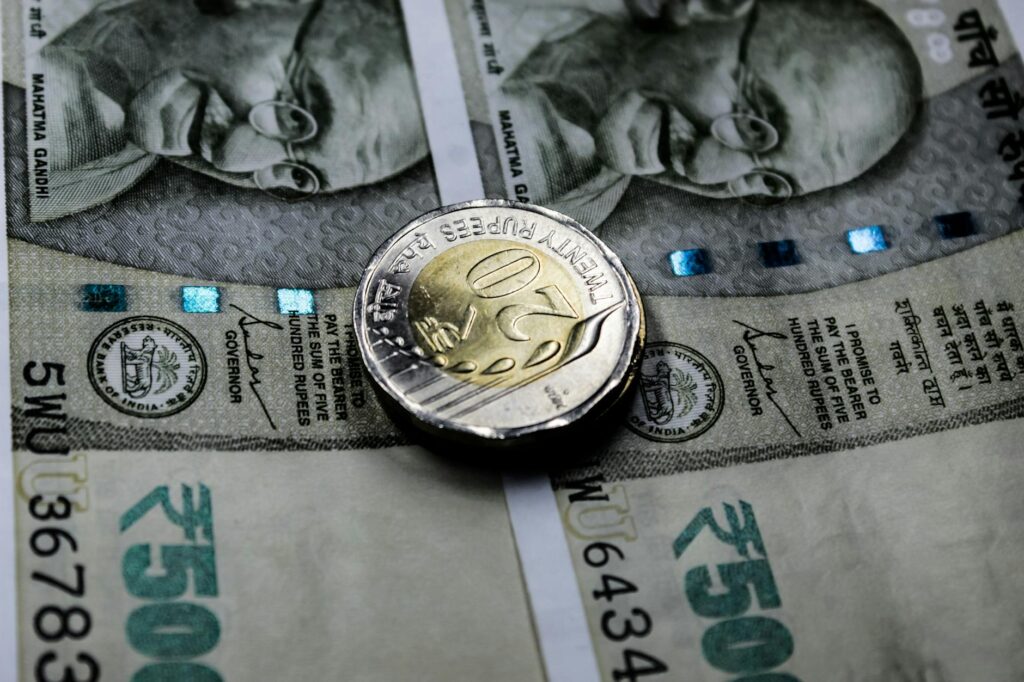
Indian gold buyers face a familiar but uncomfortable setup: the gold price is broadly steady at jewellers, yet the rupee is weak enough to keep every fresh purchase under scrutiny. With USD/INR at ₹95.78 and the RBI repo rate at 5.25%, currency and policy signals matter almost as much as the metal’s own direction.
Table of Contents
- Why Gold Is Holding Investor Attention Again
- Gold Price Today What The Market Is Actually Signalling
- What Rupee Weakness Means For Indian Retail Investors
- What To Watch Next
- Expert Insight
- Frequently Asked Questions
- Key Takeaways
Takeaway: The gold price story is not just about bullion; it is about currency, rates, risk appetite and household allocation.
Why Gold Is Holding Investor Attention Again
Gold is rarely just a commodity for Indian households. It is jewellery, emergency liquidity, wedding planning, inheritance, collateral and portfolio insurance rolled into one asset. That is why even a steady gold price can trigger fresh investor attention when the rupee weakens, global equities wobble, or central-bank policy expectations shift.
The current backdrop is mixed. Indian equities are calm on the surface, with the Sensex at 74,360.01, up +0.02% today, and the Nifty 50 at 23,416.55, up +0.05% today. But global risk appetite looks softer: the S&P 500 is at 7,553.68, down -0.74% today, while the NASDAQ is at 26,853.98, down -0.89% today. That split matters. When domestic markets look steady but global markets soften, Indian investors often revisit hedges rather than abandon risk completely.
The rupee is the bigger signal. USD/INR at ₹95.78 means Indian buyers need to watch not only the international gold price but also the currency conversion effect. Even if the overseas gold price pauses, a weaker rupee can keep domestic landed costs elevated or prevent a meaningful decline at the retail counter. That is why the gold price can feel “sticky” in India even when global cues look calm.
This is also where RBI policy enters the frame. The RBI repo rate is 5.25%, and the rate environment affects gold indirectly through the rupee, bond yields, liquidity and investor preference for income-generating assets. Gold does not pay interest. When real yields look attractive, investors ask whether a larger gold allocation is still justified. But when uncertainty rises, the same investors often accept that lack of yield as the cost of insurance.
The Indian gold market also has multiple price references. Consumers look at jewellery rates quoted by large jewellers. Investors track IBJA indicative rates, exchange-traded products, sovereign-style alternatives where available, and local bullion quotes. These references do not always move in perfect lockstep because each reflects a different point in the market chain: wholesale, retail, investment product pricing or physical delivery.
The current message is therefore subtle, not dramatic. Gold is not screaming panic. It is whispering caution. And in portfolios, whispers matter when currencies move and global risk assets hesitate.
Takeaway: Gold remains relevant because Indian investors price it through both global bullion and the rupee, not through one variable alone.
Gold Price Today What The Market Is Actually Signalling
The research brief indicates that gold prices remain broadly steady across major Indian jewellers, while IBJA indicative rates show some softness. That combination deserves careful reading. Broadly steady jewellery rates suggest retail pricing is not collapsing, while softer indicative rates suggest the wholesale or reference market may be digesting global cues, currency effects, or demand conditions.
For households, the first visible number is usually the jeweller’s quote. For investors, the more important question is different: what does a steady gold price mean when USD/INR is at ₹95.78? A flat retail quote can hide multiple moving parts. Global bullion may soften, the rupee may weaken, local premiums may adjust, and jewellers may smooth daily volatility to reflect inventory and demand. The final counter price is the result of all these forces.
That is why investors should avoid reading one gold price reference in isolation. Jewellery rates serve buyers who want ornaments and physical delivery. IBJA serves as a widely watched indicative benchmark for the bullion trade. Exchange-linked products reflect market prices after product expenses and structure. The correct reference depends on the investor’s purpose.
Here is the live market picture that frames the gold price discussion:
The comparison shows why the gold price debate is not only about jewellery counters. A domestic equity market that is barely positive, a softer US equity tape and a weak rupee create a situation where gold remains on the radar even if the day-to-day price movement looks modest.
For Indian investors, the currency effect is crucial. Gold is globally priced in dollars. Indian buyers pay in rupees. If the rupee weakens, the domestic gold price can stay firm even if international prices do not rise. That is the simplest explanation for why many buyers feel they are not getting relief despite a calm headline.
There is also a behavioural layer. When the gold price rises sharply, investors often hesitate because they fear buying the top. When the gold price stays steady during uncertainty, they hesitate again because they expect a dip. Both reactions are understandable. But gold allocation works best when it is planned rather than timed around a single retail quote.
Jewellery buyers need another distinction. Jewellery rates include elements beyond the raw metal reference. Making charges, design complexity, purity, local demand, inventory and brand pricing all influence the final bill. Investors who treat jewellery as pure investment often underestimate these frictions. If the objective is portfolio hedging, financial gold products may offer cleaner exposure than ornament purchases.
That does not make jewellery irrelevant. Indian households buy gold for cultural and personal reasons that no spreadsheet fully captures. But the investment lens should be clear. A necklace and a gold ETF do not serve the same financial purpose, even if both are linked to the same underlying metal.
The steady gold price also raises one practical question: should investors buy now or wait? The honest answer depends on allocation, not prediction. If gold is already a meaningful part of the portfolio, fresh buying can be staggered. If exposure is absent, investors may consider gradual accumulation rather than waiting for a perfect level that may never appear.
SEBI-regulated mutual funds and exchange-traded products give investors market-linked access without the storage and purity concerns of physical gold. NSE and BSE platforms provide listed routes for products that track gold-linked prices. Physical buyers, on the other hand, should focus on purity certification, transparent billing and buyback policies. The route matters as much as the view.
Gold also differs from equities. Equity investors look for earnings growth, dividends and business compounding. Gold investors look for protection against currency weakness, geopolitical shocks and monetary uncertainty. When the rupee is under pressure, that protection role becomes more visible.
So, is a steady gold price bullish or bearish? Neither by itself. It is a holding pattern. The market is waiting for clearer signals from the rupee, global risk sentiment, central-bank commentary and local demand. Investors should read steadiness as a reason to review allocation, not as a trading signal.
Takeaway: The gold price is steady, but the underlying signals are active; currency weakness is the factor Indian investors cannot ignore.
What Rupee Weakness Means For Indian Retail Investors
For Indian retail investors, rupee weakness changes the gold calculation in a direct way. A weak rupee makes dollar-linked imports costlier in local currency terms. Gold sits squarely in that transmission channel. Even when global bullion does not surge, domestic buyers may still see limited price relief because the rupee conversion offsets the softness.
This is why USD/INR at ₹95.78 matters more than many retail buyers realise. A person buying gold for a wedding, a family occasion or long-term allocation is exposed to the rupee value of gold, not just the international market direction. If the rupee weakens further, domestic prices can remain supported. If the rupee stabilises, buyers may get better pass-through from any softness in global bullion.
The impact differs by investor type:
- Jewellery buyers face retail pricing, making charges, purity choices and local demand conditions.
- Long-term investors focus on allocation, liquidity and ease of exit.
- ETF investors track exchange-linked pricing and fund structure.
- Traders watch global cues, currency moves and short-term momentum.
- Households using gold as emergency backup value liquidity and recognisable purity.
- Portfolio investors treat gold as a hedge against rupee depreciation and macro shocks.
The safe haven role becomes more relevant when other assets send mixed signals. Indian equities are calm today, with the Sensex and Nifty 50 showing small positive moves. But the S&P 500 and NASDAQ are down today, which keeps global caution alive. If foreign investors reduce risk in emerging markets, the rupee can face pressure, and gold may regain attention as a defensive asset.
There is also the question of alternative assets. Bitcoin is at $62,490.00, or ₹5,986,476.00, and Ethereum is at $1,755.05. Digital assets attract investors seeking high-risk, high-volatility exposure. But gold has a different role. It is not a cash-flow asset, and it is not a technology bet. It is a store-of-value asset with deep cultural acceptance in India and a long history as collateral and household savings.
Should retail investors compare gold with crypto? They can, but only after defining the purpose. If the goal is speculation, the comparison may arise. If the goal is portfolio insurance, gold and crypto are not substitutes. Gold’s safe haven character is built on acceptance, liquidity and its behaviour during stress. Crypto may offer upside, but it also introduces a different risk profile.
RBI policy matters here because rates shape the macro environment. With the RBI repo rate at 5.25%, investors are watching how policy affects liquidity, credit conditions and the rupee. A stable or tight rate environment can support currency confidence, while any shift in policy expectations can influence bond yields and capital flows. Gold reacts to that policy mix indirectly but meaningfully.
SEBI’s role matters for investors choosing financial gold. SEBI-regulated mutual funds and exchange-traded funds must follow disclosure, valuation and risk-management norms. That gives investors a regulated market route, though it does not remove price risk. NSE and BSE listings add transparency and tradability, but investors still need to check product structure, liquidity and tracking behaviour.
Physical gold brings a different checklist. Buyers should demand proper invoices, purity assurance and transparent terms for exchange or resale. The ICAI angle matters indirectly through audit discipline, accounting quality and financial reporting standards for listed jewellery companies and intermediaries. For investors in jewellery-company stocks, accounting quality and disclosure credibility matter; for physical buyers, billing transparency matters.
The bigger lesson is asset allocation. Gold should not become an emotional purchase every time the rupee weakens. Nor should it be ignored because equities are doing well. The right approach is to decide why gold belongs in the portfolio: currency hedge, crisis hedge, liquidity reserve, diversification tool or family need. Once the purpose is clear, the product choice becomes easier.
What should investors avoid? Panic buying. Chasing short-term headlines can lead to poor entry decisions, especially when the gold price is steady but not cheap. Investors should also avoid confusing ornament value with investment value. A beautiful piece of jewellery may carry personal value, but its investment return depends on the resale terms and costs embedded in the purchase.
For systematic investors, staggered buying can reduce regret. Instead of committing a large amount at one quote, investors can spread purchases across intervals, especially when currency volatility is high. This approach does not guarantee the lowest price. It does reduce the risk of making one large decision at an unfavourable moment.
The rupee also affects sentiment. When people see imported goods become more expensive or hear about currency weakness, gold’s psychological appeal rises. Indian households often interpret gold as protection against the erosion of purchasing power. That instinct is not irrational. But the allocation must still fit the investor’s broader financial plan.
So what is the retail investor’s practical playbook?
- Check the purpose before checking the price.
- Compare jewellery rates with investment-product pricing.
- Watch USD/INR alongside the gold price.
- Avoid using jewellery as the only form of gold investment.
- Prefer regulated channels for financial exposure.
- Keep invoices, purity documentation and product statements safely.
- Rebalance when gold becomes too large relative to the rest of the portfolio.
The current setup does not demand alarm. It demands discipline. A weak rupee can keep the gold price firm, but disciplined buying and clear allocation matter more than trying to forecast the next move.
Takeaway: Rupee weakness makes gold more relevant for Indian portfolios, but investors should respond through allocation discipline rather than emotional buying.
What To Watch Next
The next move in the gold price will likely depend on a cluster of signals rather than one headline. Indian investors should watch the rupee, global risk appetite, RBI policy communication, domestic demand and product flows across listed gold routes. Which of these breaks first?
USD/INR Movement
USD/INR at ₹95.78 is the cleanest India-specific signal for gold buyers. If the rupee weakens further, domestic gold can stay supported even without a strong global rally. If the rupee stabilises, Indian buyers may see better pass-through from any softness in overseas prices.
Takeaway: For Indian buyers, the rupee can be the difference between a global dip and a domestic non-event.
RBI Policy Tone
The RBI repo rate is 5.25%, and the policy tone around inflation, liquidity and currency stability will influence investor behaviour. Gold does not respond only to the repo rate; it responds to what the rate signals about the broader macro environment. Any change in expectations around liquidity or currency management can affect demand for hedges.
Takeaway: Watch RBI commentary as much as the policy number because gold reacts to expectations.
Global Equity Risk Appetite
The S&P 500 at 7,553.68, down -0.74% today, and the NASDAQ at 26,853.98, down -0.89% today, show pressure in global equities. If global risk appetite weakens further, investors may increase demand for defensive assets. If equities rebound strongly, gold could lose some near-term urgency as a hedge.
Takeaway: Gold often gains attention when global equity confidence cracks, even if Indian indices remain steady.
Domestic Jewellery Demand
Jewellery demand in India can influence retail pricing, especially around household buying periods and festive or wedding-linked purchases. Jewellery rates may remain steadier than wholesale references because retail pricing includes inventory, brand and demand factors. Investors should not assume every move in a benchmark immediately appears at the shop counter.
Takeaway: Retail gold pricing moves through a different chain than benchmark bullion pricing.
Financial Gold Product Behaviour
SEBI-regulated gold funds and exchange-traded products provide a cleaner investment route for many investors. Watch liquidity, tracking behaviour and market spreads rather than only the headline gold price. NSE and BSE trading data can help investors assess whether financial gold products are moving efficiently.
Takeaway: Product quality matters; the gold view is only half the decision.
Expert Insight
Commodity-market analysts typically read the current setup as a “currency-led caution” phase rather than a pure bullion rally. Their view is that a steady gold price, softer indicative references and a weak rupee can coexist because Indian prices are shaped by both international bullion and domestic currency conversion. For portfolio investors, the message is not to chase every uptick, but to maintain planned exposure to gold as a safe haven while using regulated, liquid routes where the purpose is investment rather than consumption.
Takeaway: The strongest argument for gold right now is not momentum; it is portfolio resilience.
Frequently Asked Questions
Is gold price expected to rise because the rupee is weak?
A weak rupee can support the domestic gold price because gold is globally priced in dollars and Indian buyers pay in rupees. That does not guarantee a rise, since global bullion prices, demand and market sentiment also matter. But USD/INR at ₹95.78 keeps currency risk firmly in the gold discussion.
Should I buy gold jewellery now or wait?
If the purchase is for a family need, timing should not be based only on a short-term gold price view. Compare jewellery rates across reputed sellers, check purity, insist on a proper invoice and understand resale or exchange terms. If the goal is investment, consider whether jewellery is the most efficient route.
Is IBJA rate the same as the price I pay at a jeweller?
No, an IBJA indicative rate is a market reference, while the final retail price at a jeweller can include other elements such as making charges, design, purity and local pricing policy. That is why jewellery rates may not match indicative rates exactly. Investors should use the reference to understand the trend, not as a final bill estimate.
Is gold better than stocks when markets are uncertain?
Gold and stocks serve different purposes. Stocks offer participation in business growth, while gold provides diversification and can act as a safe haven during stress. With the Sensex at 74,360.01 and the Nifty 50 at 23,416.55, investors do not need to abandon equities; they need to size gold sensibly within the portfolio.
Is gold safer than Bitcoin for Indian investors?
Gold and Bitcoin have very different risk profiles. Bitcoin is at $62,490.00, or ₹5,986,476.00, and can attract investors seeking high-risk exposure, while gold is typically used for stability, liquidity and diversification. For conservative Indian investors, gold generally fits the hedge bucket more naturally than crypto.
Key Takeaways
- The gold price is broadly steady, but USD/INR at ₹95.78 keeps Indian buyers alert.
- A weak rupee can limit the benefit of any softness in global bullion for domestic consumers.
- The Sensex at 74,360.01 and Nifty 50 at 23,416.55 show calm domestic equities, while weaker US indices keep global caution alive.
- IBJA references and jewellery rates can differ because they reflect different parts of the gold market.
- Gold works best as a planned allocation, not as a panic purchase during currency weakness.
- SEBI-regulated gold products offer investment exposure without the storage and purity issues of physical gold.
- Jewellery buyers should focus on purity, billing transparency and resale terms, not just the displayed gold price.
Disclaimer: This article is for informational purposes only and does not constitute investment advice. Please consult a SEBI-registered financial advisor before making investment decisions.
Sources & references

Bhavik Vaid
Bhavik Vaid writes on Indian markets, taxation, banking and personal finance for CADialogue. He covers RBI policy, GST and income-tax changes, mutual funds and market moves, translating them into practical guidance for retail investors, salaried professionals and business owners in India.


