Passive Income in India: What Actually Works
Passive income in India separated into capital-based and effort-based, with real capital requirements, honest timelines, scams to avoid and the tax.
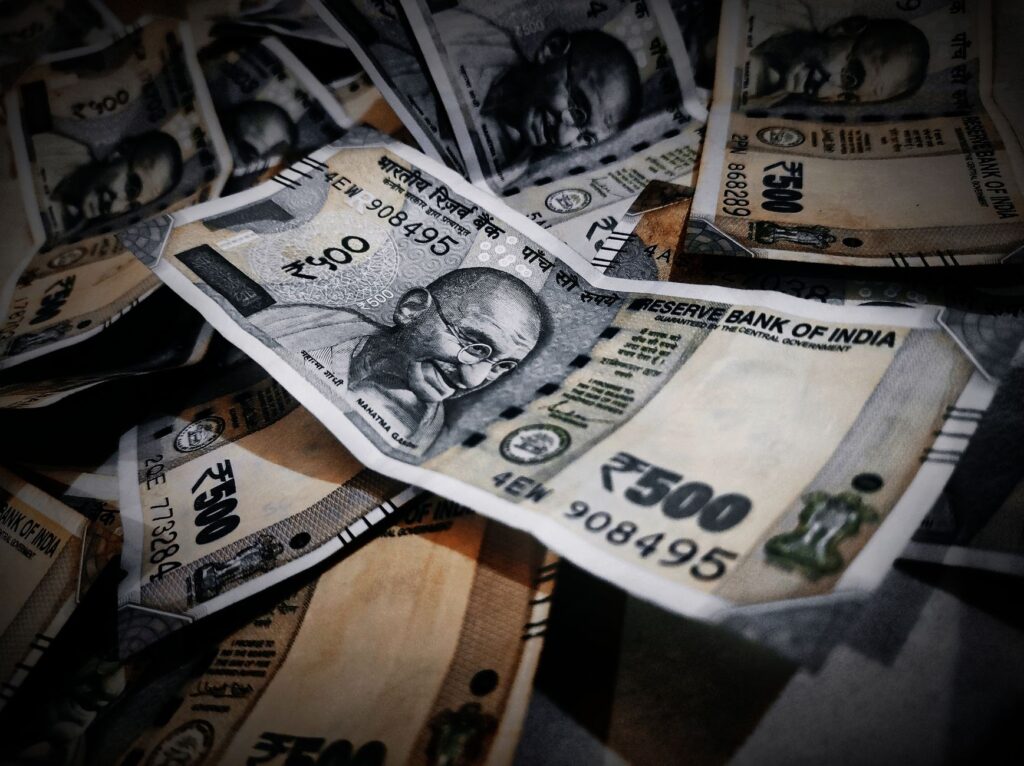
Genuinely passive income in India comes from capital, not from effort. Dividends, interest, rent and bond coupons pay you for money you already have. Everything marketed as “passive” that starts with no capital is a business with a delayed payoff, and most of it is neither passive nor income for a long time.
That distinction is the entire subject, and it is worth being blunt about because the search results for this phrase are mostly selling something.
The two categories, kept separate
Capital-based. You own an asset and it pays you. Requires money up front, very little time after. Returns are modest and reasonably predictable.
Effort-based. You build something once and it earns later. Requires time up front, little money. Returns are unpredictable, often zero, occasionally large.
Both are legitimate. Confusing them is what makes people quit, because they enter an effort-based project expecting capital-based passivity.
Capital-based income in India
| Source | How it pays | Taxed as | Honest note |
|---|---|---|---|
| Bank FDs | Interest, monthly or at maturity | Slab rate | Subtract inflation and tax before calling it a return |
| Dividends | Company payouts | Slab rate since FY 2020-21 | Not guaranteed; companies cut them |
| Rent | Monthly from property | House property, with 30% standard deduction | Vacancy, maintenance and tenants are real work |
| Bonds and debt funds | Interest or gains | Slab or capital gains, by type | Section 50AA changed the maths on specified mutual funds |
| Sovereign Gold Bonds | 2.5% a year plus gold’s move | Interest taxable; gain exempt at maturity | Long lock-in, issuance is not continuous |
The uncomfortable arithmetic: at an FD paying around 7% with inflation near 4.4%, the real return is about 2.6% before tax. In the 30% bracket, after tax, it is close to nothing. Capital-based income preserves wealth well; it builds wealth slowly.
To draw ₹25,000 a month from FDs at 7% you need roughly ₹43 lakh of capital. That number is why “passive income” advice aimed at people without capital always points somewhere else.
Effort-based income, with realistic timelines
Content that earns. A niche site, YouTube channel or newsletter. Nine to eighteen months before meaningful money, and a large share never reach it. Genuinely low-maintenance afterwards, but exposed to a single algorithm change.
Digital products. Templates, courses, Notion systems, stock photos. Three to nine months to a first steady month. Closest thing to real passivity once built, though every product decays and needs refreshing.
Affiliate income. Requires an audience first, so it is a second layer on top of content rather than a standalone plan.
Websites as assets. Build, grow, sell at 30 to 50 times monthly profit. This is a business, and the payoff is a lump sum rather than a stream.
Notice what is common to all four: months of unpaid work before the first rupee. That is the price of entry when you are substituting time for capital, and it is the part that gets edited out of the marketing.
What to avoid
- Anything promising fixed high monthly returns. No legitimate investment guarantees an above-market fixed return. That combination is the standard shape of a Ponzi structure.
- Income that depends on recruiting people. If your earnings come from enrolling others rather than selling a product, the structure is a pyramid regardless of the label.
- Trading presented as passive. It is active by definition, and SEBI’s own studies of individual traders in the equity derivatives segment have repeatedly found that the large majority lose money.
- Unregulated “investment” apps offering deposits with fixed returns outside the banking and securities framework. No deposit insurance, no recourse.
One test settles most cases: where does the money come from? If you cannot name the customer paying and the product they buy, you may be the product.
The tax nobody plans for
Passive income is taxable income, and the treatment differs by source, which makes it easy to under-report by accident.
- Interest and dividends are taxed at your slab. Both appear in your AIS whether or not TDS was deducted, so omitting them is visible.
- Rent is taxed under house property with a 30% standard deduction; home loan interest may be set off.
- Digital product and affiliate income is business income. Presumptive schemes may apply, and the ₹20 lakh GST services threshold is in play once it scales.
- Foreign platform payouts bring export-of-services questions and, for equity in overseas companies, separate foreign asset disclosure obligations.
Check your AIS before filing. Savings interest and dividends never appear in Form 26AS when no TDS was deducted, but they do appear in the AIS, and that gap is one of the most common causes of a mismatch notice.
A defensible plan
- Build an emergency fund first. Six months of expenses in a liquid account. Without it, one bad month forces you to sell the assets you are trying to accumulate.
- Use your salary as the engine. For most people the fastest route to capital income is a high savings rate, not a side project.
- Add one effort-based project, chosen because you would do it anyway, and give it twelve months before judging.
- Convert earnings into capital-based assets as they arrive, so the effort compounds into something that pays without you.
- Reserve 30% for tax from the first rupee of non-salary income.
REITs and InvITs: the middle ground
Between a fixed deposit and buying property sits a category most retail investors in India still overlook.
A Real Estate Investment Trust holds income-producing commercial property and distributes most of its cash flow to unitholders. An Infrastructure Investment Trust does the same for infrastructure assets such as roads and transmission lines. Both are SEBI-regulated, listed, and tradeable like shares.
What makes them relevant to passive income:
- Property-like income without being a landlord. No tenants, no repairs, no vacancy management.
- Liquidity. Units sell on the exchange in a day. A flat takes months.
- A far lower entry ticket than buying commercial property directly.
The trade-offs are real. Distributions are not guaranteed and move with occupancy and rentals. Unit prices fluctuate, so capital is not protected. And the taxation of distributions is genuinely fiddly: a distribution can be a mix of interest, dividend, rental income and return of capital, each treated differently, and the trust tells you the split each year. Read that statement before filing rather than assuming it is all one thing.
Building the capital, realistically
If the capital-based routes need capital, the honest question is how anyone accumulates it. For most salaried people the answer is unglamorous.
A person saving Rs 20,000 a month at a 10% annual return accumulates roughly Rs 41 lakh in ten years. Most of that is contribution rather than return in the early years, which is why the first few years feel pointless and why most people stop.
Three things move the number more than investment selection does:
- The savings rate. Going from 15% to 30% of income roughly halves the time to any target. No fund choice competes with that.
- Not interrupting. Withdrawing during a bad year converts a paper loss into a real one and resets the compounding.
- Cost. A 1% higher expense ratio compounds against you for the whole period.
This is why the passive income conversation and the savings rate conversation are the same conversation, and why side income matters mostly as a way to raise the savings rate rather than as an end in itself.
How each income type is actually taxed
| Income | Head | Broad treatment |
|---|---|---|
| Bank and FD interest | Other sources | Slab rate. 80TTA or 80TTB may apply under the old regime |
| Dividends | Other sources | Slab rate in your hands |
| Rent | House property | 30% standard deduction, loan interest may be set off |
| Equity mutual funds | Capital gains | Short or long term by holding period |
| Specified mutual funds | Capital gains | Section 50AA deems gains short term at slab rate |
| Digital products, affiliate | Business or profession | Slab rate; presumptive schemes may apply |
| Sovereign Gold Bonds | Mixed | Interest taxable; capital gain exempt if held to maturity |
The pattern worth noticing: almost everything genuinely passive is taxed at your slab rate. That is why the real return on capital income is so much lower than the headline rate suggests, and why the after-tax number is the only one worth comparing.
Questions to ask before committing money
- Who pays me, and out of what? If you cannot name the customer and the product, stop.
- Is it regulated, and by whom? RBI for deposits, SEBI for securities and REITs, IRDAI for insurance. An offering outside all three has no recourse mechanism.
- What happens in a bad year? Every real asset has one. If the pitch has no answer, the pitch is incomplete.
- How do I exit, and how fast? Lock-ins are not automatically bad, but they must be known before you enter.
- What is the after-tax return? Not the headline.
What to do this month
Passive income is a long project, so the useful question is not what to buy but what to do next.
- Calculate your actual savings rate for the last three months. Most people overestimate it, and it is the single number that determines how long this takes.
- Check your emergency fund covers six months of expenses in something liquid.
- Download your AIS and look at the interest and dividends already listed. You may have more passive income than you thought, and it is already visible to the department.
- Pick one effort-based project you would do anyway, and commit twelve months to it before judging the result.
None of that requires capital, and all of it moves the position more than choosing between two similar funds.
Common questions
How much do I need for ₹50,000 a month passive?
At roughly 7% before tax, on the order of ₹85 lakh in interest-bearing assets. After tax, materially more.
What is the best passive income in India?
For those with capital, a diversified mix of debt, equity and possibly property. For those without, building an asset and converting the proceeds into capital.
Is rental income really passive?
Less than people expect. Vacancy, repairs, tenant management and compliance are ongoing.
Is dividend income tax free?
No. Dividends have been taxable in the recipient’s hands at slab rates since FY 2020-21.
Can I start passive income with no money?
You can start effort-based income with no money. It will not be passive for the first several months.
The short version
Capital pays you passively; effort pays you eventually. Drawing ₹25,000 a month from FDs takes around ₹43 lakh, which is why advice for people without capital always points at building something first. Pick one effort-based project, give it a year, convert what it earns into assets that pay without you, and declare all of it, because your AIS already lists the interest and dividends your Form 16 does not.
Sources & references

Bhavik Vaid
Bhavik Vaid writes on Indian markets, taxation, banking and personal finance for CADialogue. He covers RBI policy, GST and income-tax changes, mutual funds and market moves, translating them into practical guidance for retail investors, salaried professionals and business owners in India.


