Stock Market Indices: Beginner Guide to Nifty 50 and Sensex
Stock market indices like Nifty 50 and Sensex simplify market tracking by converting the movement of selected stocks into one benchmark number.
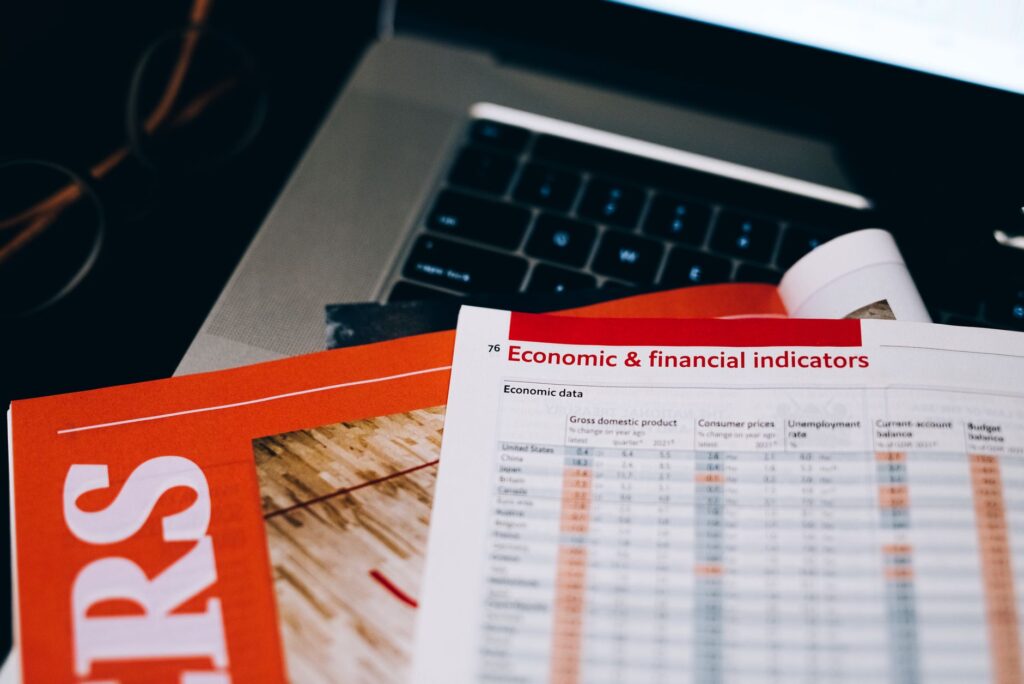
Stock market indices are the easiest way to read the mood of the equity market without tracking thousands of listed companies. For Indian investors, Nifty 50 and Sensex are not just headline numbers, they are benchmarks for mutual funds, ETFs, derivatives and portfolio performance.
Stock market indices explained: what they measure
A stock market index is a basket of selected shares that represents a market, sector or investment theme. Instead of showing the price movement of one company, it combines the movement of many companies into a single value.
For example, the Nifty 50 tracks 50 large and liquid companies listed on NSE. The Sensex tracks 30 large companies listed on BSE. When people say “the market is up”, they usually refer to these benchmark indices.
But an index does not include every listed stock. It follows a defined methodology. The index provider decides which companies qualify based on rules such as market capitalisation, liquidity, trading history and sector representation.
Market capitalisation means the total value of a company’s listed shares. It is calculated by multiplying the share price by the number of outstanding shares.
How Nifty 50 and Sensex index calculation works
Most major Indian stock market indices use free-float market capitalisation. Free float means shares available for public trading. It excludes promoter holdings, government holdings and other locked-in strategic holdings.
This method gives higher weight to larger companies with more publicly traded shares. As a result, heavyweights such as large banks, IT firms, Reliance Industries, HDFC Bank, Infosys or ICICI Bank can influence the index more than smaller companies.
This also explains a common confusion. The Nifty 50 may rise even if many shares are falling. If a few large-weight stocks gain sharply, they can offset weakness in several smaller index constituents.
Index values are maintained through a base date and base value. For instance, Nifty 50 has a base date of November 3, 1995, and a base value of 1,000, according to NSE Indices. The Sensex has a base year of 1978-79 and a base value of 100, as per BSE methodology references.
Index providers also conduct periodic reviews. They may add or remove stocks if companies no longer meet the eligibility criteria. This process is called rebalancing.
Major Indian indices: Nifty 50, Sensex, Bank Nifty and more
India has several equity benchmarks beyond the two headline indices. Each serves a different purpose for investors, traders and fund managers.
Key Indian indices include:
- Sensex: BSE’s benchmark index of 30 large, established companies.
- Nifty 50: NSE’s flagship index of 50 diversified large-cap stocks.
- Nifty Next 50: Tracks the next 50 large companies after Nifty 50. Many investors see it as a pool of future large-cap leaders.
- Bank Nifty: A sectoral index covering major banking stocks. It is widely used in futures and options trading.
- Nifty Midcap 100: Tracks mid-sized companies and reflects broader growth opportunities beyond large caps.
- Nifty Smallcap 100: Tracks smaller companies, usually with higher volatility and higher risk.
Broad market indices like Nifty 50 and Sensex are useful for long-term market tracking. Sectoral indices like Bank Nifty or Nifty IT help investors understand industry-specific trends. Midcap and smallcap indices show whether risk appetite is improving or weakening in the broader market.
Global benchmark indices and their impact on Indian markets
Indian markets do not move in isolation. Global benchmark indices often affect domestic sentiment, especially at market opening.
The S&P 500 is one of the most tracked U.S. indices and represents large American companies across sectors. The Nasdaq Composite is known for its strong technology and growth stock exposure. The Dow Jones Industrial Average is a widely followed U.S. headline benchmark.
Other important global indices include the FTSE 100 in the United Kingdom, Nikkei 225 in Japan, DAX in Germany and Hang Seng in Hong Kong.
These indices matter for Indian investors because foreign institutional investors, currency movements and global risk appetite influence domestic equities. If U.S. markets fall sharply overnight due to inflation data, interest rate signals or geopolitical tensions, the Nifty and Sensex may open weak the next day.
Similarly, a rally in global markets can improve sentiment in Indian equities, especially in export-oriented sectors such as IT, pharma and metals.
Stock market indices and their use in investing
Stock market indices are not just market indicators. They are also the foundation of passive investing.
An index fund is a mutual fund that tries to replicate an index by holding similar stocks in similar proportions. An ETF, or exchange-traded fund, also tracks an index but trades on the stock exchange like a share.
For example, a Nifty 50 index fund aims to mirror the performance of the Nifty 50, before expenses and tracking error. Tracking error means the difference between the fund’s return and the index return.
Investors also use indices for benchmarking. If your large-cap mutual fund delivered 10 percent in a year while the Nifty 50 Total Return Index delivered 14 percent, the fund underperformed its benchmark. Total Return Index, or TRI, includes dividends and gives a better comparison than a price-only index.
Indices also help with asset allocation. A retail investor can compare large-cap, midcap, smallcap and sectoral indices before deciding where valuations and risk look reasonable.
What stock market indices mean for your portfolio
Stock market indices simplify decision-making, but they do not remove risk. They show direction, sentiment and relative performance, not guaranteed returns.
For beginners, the key lesson is simple. Understand what an index represents before investing in any index fund, ETF or derivative product linked to it. Nifty 50 is diversified across sectors, while Bank Nifty is concentrated in banking. Midcap and smallcap indices can deliver strong gains but may fall harder during corrections.
Use indices as reference points, not as predictions. Compare your MF returns with the right benchmark. Check expense ratio and tracking error before choosing passive funds. Avoid assuming that a rising index means every stock is doing well.
The practical takeaway is clear. Sensex, Nifty 50 and global indices help you read the market with discipline. If you understand how they work, you can make better SIP, MF and portfolio decisions without getting carried away by daily market noise.
Sources & references

Bhavik Vaid
Bhavik Vaid writes on Indian markets, taxation, banking and personal finance for CADialogue. He covers RBI policy, GST and income-tax changes, mutual funds and market moves, translating them into practical guidance for retail investors, salaried professionals and business owners in India.
