Metals Recovery Builds as Non-Ferrous Earnings Lead
Metals sector India outlook: non-ferrous earnings may drive the next rally as steel volumes, capacity additions and lower costs lift select stocks.
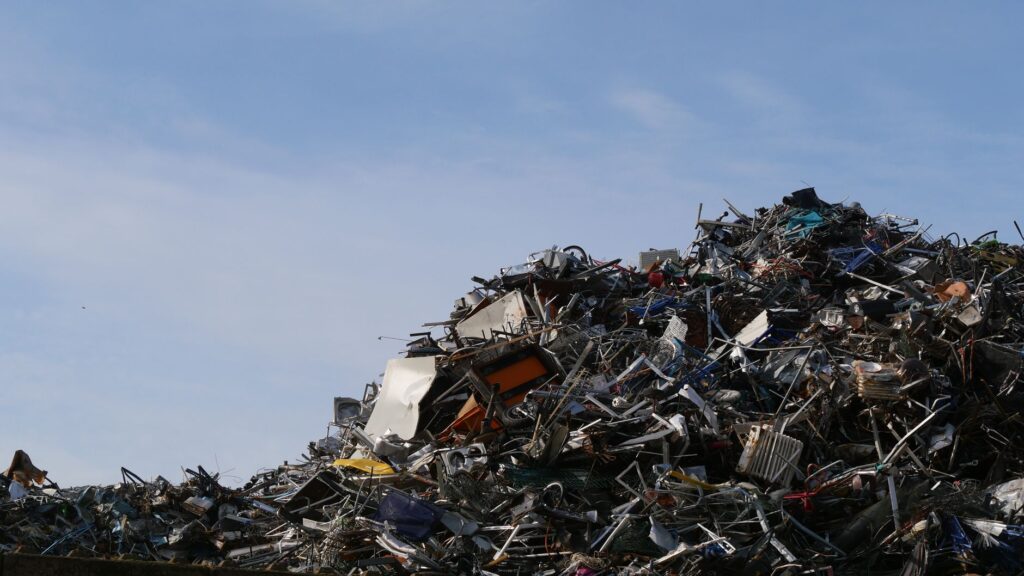
The metals sector is turning from a waiting game into a stock-picking market, with non-ferrous earnings expected to lead the recovery while select steel producers benefit from better volumes, capacity additions and softer cost pressure. That shift matters because Indian equities are slightly weak today: Sensex is at 77,379.99, down -0.21%, while Nifty 50 is at 24,190.05, down -0.26%. When the broader market pauses, sector leadership becomes more important.
Table of Contents
- Why the metals sector is back on investors radar
- Metals sector recovery nonferrous earnings take the lead
- What this means for Indian retail investors
- What to watch before buying metals stocks
- Expert Insight
- Frequently Asked Questions
- Key Takeaways
Why the metals sector is back on investors radar
The Indian metals sector is entering a more constructive phase after a period in which investors had to balance weak pricing, cost volatility and uneven demand. The latest headline from Economic Times, citing Systematix, says the metals sector outlook has improved, with non-ferrous earnings leading the recovery. That is a meaningful signal for investors because metals are not a single trade. Aluminium, copper, zinc, steel and mining-linked businesses react to different demand cycles, input costs, global prices and balance-sheet structures.
The immediate market backdrop is mixed. Sensex is at 77,379.99, down -0.21% today, and Nifty 50 is at 24,190.05, down -0.26% today. In contrast, the S&P 500 is at 7,674.37, up +0.43% today, and NASDAQ is at 26,180.46, up +0.43% today. That divergence tells Indian investors something important: global risk appetite is not broken, but domestic equities are not moving in lockstep with Wall Street. In such a market, sector-specific earnings drivers matter more than broad index momentum.
The rupee also sits at an important point for metals investors. USD/INR is at ₹95.71. A weaker rupee can support exporters and companies with dollar-linked revenue, but it can also raise the landed cost of imported raw materials, energy inputs and machinery. Metals companies sit on both sides of that equation. Some benefit from global benchmark pricing. Others feel the pressure through imported coal, equipment, technology services or foreign-currency debt. The same currency move can help one company and hurt another.
RBI policy remains another anchor. The repo rate is at 5.25%, which keeps the cost of capital relevant for capital-intensive businesses such as metals and mining. Expansion plans, brownfield upgrades, working capital and inventory financing all depend on funding conditions. If borrowing costs stay firm, investors will reward companies that can fund growth through internal accruals, disciplined leverage and efficient capital allocation.
Why does this matter now? Because a recovery led by non-ferrous metals is usually different from a broad steel-led rally. Non-ferrous companies can benefit from supply discipline, stronger export realisations, power-cost management and demand from electrification, infrastructure, renewables and industrial activity. Steel stocks, by contrast, often need domestic volume growth, better spreads and cost easing to drive a durable rerating.
The takeaway: the metals sector recovery is becoming more selective, and investors need to separate earnings visibility from commodity-price excitement.
Metals sector recovery nonferrous earnings take the lead
The core message from the latest sector view is clear: non-ferrous metals may drive the next stage of earnings recovery, while select steel producers may also gain from capacity expansion, volume revival and easing cost pressure. This is not a blanket “buy everything” signal. It is a shift toward differentiated earnings quality.
Non-ferrous metals include businesses linked to aluminium, copper, zinc and other industrial metals outside iron and steel. These companies can show sharper operating leverage when realisations improve and input costs stabilise. They also tend to have company-specific cost curves. Power cost, captive mining, smelting efficiency, logistics and hedging policies can create meaningful performance gaps between players even within the same commodity.
Steel stocks face a different earnings equation. Investors need to track volume, spreads, raw material costs and imports. A steel company expanding capacity can report stronger sales volume if demand absorbs the new supply. But higher capacity alone does not create value. The market wants to see utilisation, disciplined pricing and manageable debt. If input costs ease while volumes recover, steel producers can show better profitability without needing a dramatic price rally.
Here is how the current setup looks across major investor variables:
| Factor | Non-ferrous metals | Steel stocks | Investor takeaway |
|---|---|---|---|
| Earnings driver | Better realisations, cost control, operating leverage | Volume revival, capacity expansion, easing input costs | Recovery is likely to be stock-specific |
| Global linkage | High sensitivity to international prices and currency | Sensitive to imports, exports and domestic demand | Watch both global prices and Indian demand |
| Currency impact | USD/INR at ₹95.71 can influence export realisations and import costs | Currency affects raw materials, equipment and trade flows | Rupee movement can change margins |
| Rate environment | RBI repo rate at 5.25% keeps financing discipline important | Expansion-heavy companies must manage debt carefully | Balance sheets matter |
| Market backdrop | Sensex at 77,379.99, down -0.21%; Nifty 50 at 24,190.05, down -0.26% | Same domestic risk environment applies | Sector strength must overcome index softness |
The key point is that metals investors should not treat “earnings recovery” as a uniform event. A company with captive raw materials, efficient energy sourcing and a clean balance sheet is not in the same position as a company that depends heavily on external inputs and aggressive borrowing. The equity market usually recognises that difference when earnings visibility improves.
Non-ferrous metals also have a different demand narrative. They connect to power infrastructure, electrical equipment, consumer durables, transport, renewables and industrial manufacturing. If capex activity continues and industrial demand improves, these metals can see better volume visibility. The market often rewards that visibility before the full earnings improvement appears in reported financials.
Steel stocks, however, need a closer reading of domestic demand. Construction, infrastructure, auto, engineering and real estate activity can support volumes, but pricing discipline remains critical. If imports rise sharply or domestic prices weaken, the benefit of higher volumes can get diluted. That is why investors should not buy steel stocks only because capacity is expanding. They should ask a harder question: will the company earn enough on that new capacity?
There is also a timing difference. Non-ferrous earnings can move quickly when benchmark prices and costs align favourably. Steel earnings can take longer if pricing remains competitive or if new capacity ramps up gradually. That makes the current phase well suited to investors who can compare cost structures rather than chase headlines.
The regulatory and reporting lens also matters. SEBI‘s disclosure framework requires listed companies to communicate material developments, and investors should track exchange filings on NSE and BSE rather than relying only on commentary. ICAI-aligned accounting policies influence how inventory, depreciation, impairment and hedging-related items appear in financial statements. For metals companies, these accounting choices can affect reported profit volatility. Retail investors should read notes to accounts, not just headline profit.
What about the broader market? With Nifty 50 at 24,190.05 and down -0.26% today, the index is not giving a strong risk-on signal. But sector recoveries often begin before index-level strength becomes visible. If the earnings cycle improves, institutional investors can rotate into metals even when headline indices remain range-bound.
The takeaway: non-ferrous earnings may lead the metals sector recovery, but the winners will be companies with strong cost control, balance-sheet discipline and credible volume growth.
What this means for Indian retail investors
For Indian retail investors, the temptation is obvious: when a brokerage-backed sector outlook improves, buy the most familiar metal names and wait for the cycle. That approach can work in a broad commodity rally, but it can also expose investors to sharp drawdowns when prices reverse. Metals are cyclical. Earnings can expand quickly, and valuations can look cheap near the top of the cycle because profits are temporarily inflated.
A better approach is to divide the metals sector into buckets. One bucket includes non-ferrous metals companies with improving earnings visibility. Another includes steel stocks with capacity-led growth and cost relief. A third includes mining and diversified commodity businesses where profits depend heavily on policy, royalty structures, production permissions and global realisations. Each bucket deserves a different valuation lens.
Retail investors should focus on the following practical checks:
- Does the company have captive raw material access or does it depend heavily on market purchases?
- Are energy costs stable, or can power and fuel pressure hurt margins?
- Is the company expanding capacity through internal cash flows or heavy borrowing?
- Does the balance sheet leave room for a downcycle?
- Are management commentary and exchange filings aligned?
- Is the stock already pricing in a strong earnings recovery?
- Does the company have export exposure, and how does USD/INR at ₹95.71 affect it?
The RBI repo rate at 5.25% is especially relevant for leveraged companies. Capital-intensive sectors need money. If funding costs remain elevated, a company with aggressive debt-funded expansion may face pressure even if demand improves. Investors should compare debt maturity, interest cost trends and cash generation, using company filings rather than market rumours.
SEBI’s role also matters for retail investors. Listed metals companies must disclose material information through stock exchanges. NSE and BSE filings often provide the first reliable signal on capacity commissioning, shutdowns, mining approvals, fundraising, pledges, related-party transactions and board decisions. If a company’s stock runs up on market chatter but exchange filings show no material update, investors should stay cautious.
There is also a portfolio-construction question. Should metals be a core holding or a tactical allocation? For most retail investors, metals work better as a cyclical allocation than a permanent overweight. These stocks can generate strong returns when earnings turn, but they also suffer when prices weaken, costs rise or global demand slows. A staggered approach can reduce timing risk.
Mutual fund investors need to look under the hood. A diversified equity fund may already hold metals exposure. Sector funds or thematic funds can amplify risk. If an investor owns a flexi-cap fund, a value fund and a sectoral metals fund, the combined commodity exposure may be higher than it appears. This is where portfolio overlap matters. What looks like diversification on paper can become concentration in practice.
For direct equity investors, valuation discipline is non-negotiable. Metals companies often look optically cheap on earnings multiples during strong profit phases. The real question is whether those earnings are sustainable. Investors should avoid valuing a cyclical company as if peak margins will continue indefinitely. Cash flow quality, replacement cost, return on capital and capital expenditure discipline matter more than a single profitable period.
The current market setup also argues for selectivity. Sensex is down -0.21% today and Nifty 50 is down -0.26% today, which means broad domestic sentiment is not euphoric. That can be useful. It gives disciplined investors time to evaluate the metals sector without chasing a runaway index. But it also means weak stocks can fall faster if earnings disappoint.
Global cues remain relevant. The S&P 500 is up +0.43% today and NASDAQ is up +0.43% today, showing positive global equity tone. For Indian metals, stronger global risk appetite can support foreign institutional interest, but the translation is not automatic. If the rupee remains under pressure, foreign investors may demand higher returns to compensate for currency risk. A rising global market does not guarantee rising Indian metals stocks.
The takeaway: Indian retail investors should treat the metals sector as a selective earnings recovery trade, not a blind commodity bet.
What to watch before buying metals stocks
The next phase of the metals sector will depend on a mix of global prices, domestic demand, company balance sheets and policy signals. Investors should avoid reacting to a single brokerage note or a single day’s price move. The better strategy is to track indicators that confirm whether earnings recovery is broadening or fading.
Global non-ferrous price trends
Non-ferrous metals are highly sensitive to global benchmark prices. If prices remain firm while input costs stay controlled, earnings can improve meaningfully. But if prices soften, companies with weaker cost positions can see margin pressure quickly. Investors should track whether price strength is demand-led or merely speculative.
For Indian investors, the currency layer matters. USD/INR is at ₹95.71. A rupee move can influence import costs, export realisations and the translation of global prices into domestic economics. A company that benefits from dollar-linked sales may still suffer if imported inputs rise faster.
Domestic volume growth in steel
Steel stocks need volume support. Capacity expansion becomes valuable only when plants operate efficiently and demand absorbs output. Investors should track management commentary on utilisation, order flows and sector demand from construction, infrastructure, automobiles and engineering.
Volume without margins is not enough. If steel prices face pressure, higher shipments may not fully protect profits. The best setup is a combination of better volumes, stable spreads and easing raw material costs.
Cost pressure and energy inputs
Cost control is central to metals earnings. Energy, freight, raw materials and maintenance can change the profit picture quickly. Non-ferrous producers are especially sensitive to power costs, while steel producers must manage coal, ore, logistics and conversion costs.
Retail investors should compare companies by cost structure rather than only by market capitalisation or brand familiarity. A lower-cost producer can survive a weak pricing cycle and benefit more strongly when the cycle turns.
Balance sheet and capital allocation
The RBI repo rate is at 5.25%, so financing conditions cannot be ignored. Metals companies often run large capital expenditure programmes, and debt can magnify both upside and downside. Investors should prefer companies that explain funding plans clearly and maintain prudent leverage.
Capital allocation also includes dividends, acquisitions, expansion projects and debt reduction. A company that chases growth at any price can destroy value even in a favourable cycle. A company that expands at the right cost and right time can compound earnings through the cycle.
Exchange filings and regulatory signals
NSE and BSE filings matter more than market rumours. Investors should monitor announcements on capacity commissioning, production disruptions, mining permissions, fundraising, pledges and management changes. SEBI’s disclosure regime gives investors a formal trail of material information.
Accounting disclosures deserve attention too. ICAI-linked reporting standards shape how companies present inventory movements, depreciation, impairment and derivative positions. Metals investors should read financial notes carefully because reported earnings can include effects that are not purely operational.
The takeaway: before buying metals stocks, investors should confirm the recovery through prices, volumes, costs, balance sheets and official filings.
Expert Insight
Analysts who track commodities and capital goods say the emerging recovery in the metals sector is less about a broad commodity super-cycle and more about earnings normalisation in companies with stronger cost curves. Their view is that non-ferrous metals may show cleaner operating leverage where input costs remain controlled, while steel stocks need proof of volume absorption and spread stability before the market assigns higher valuations. For investors, the message is simple: buy earnings visibility, not just price momentum.
The takeaway: expert opinion points toward selective ownership, with non-ferrous earnings quality and steel balance-sheet discipline at the centre of the thesis.
Frequently Asked Questions
Is the metals sector a good investment now?
The metals sector outlook has improved, with non-ferrous earnings expected to lead the recovery, according to the Economic Times headline citing Systematix. That does not mean every metals stock is attractive. Investors should focus on cost control, balance-sheet strength, capacity utilisation and valuation before buying.
Which is better now: non-ferrous metals or steel stocks?
Non-ferrous metals appear better placed to lead the earnings recovery, while select steel stocks can also benefit from capacity expansion, volume revival and easing cost pressure. The choice depends on the company. A strong steel company with disciplined expansion may outperform a weaker non-ferrous company, so stock selection matters more than the category label.
How does USD/INR affect Indian metals companies?
USD/INR is at ₹95.71, and that affects metals companies through exports, imports, global benchmark pricing and foreign-currency liabilities. A weaker rupee can help companies with dollar-linked revenues but hurt those that import raw materials or equipment. Investors should check each company’s exposure rather than assume one uniform impact.
Should retail investors buy metals stocks directly or through mutual funds?
Direct stocks offer sharper upside but require deeper research into costs, debt, commodity prices and exchange filings. Mutual funds provide diversification, but investors must check whether their existing funds already hold metals exposure. A sector-heavy fund can increase concentration risk.
What are the biggest risks in metals stocks?
The biggest risks are falling commodity prices, rising input costs, weak demand, high debt and poor capital allocation. Regulatory changes, currency volatility and global risk-off moves can also affect sentiment. Since Sensex is at 77,379.99 and down -0.21% today while Nifty 50 is at 24,190.05 and down -0.26% today, investors should avoid assuming that the broader market will automatically support the trade.
The takeaway: retail investors should use the metals recovery as a research opportunity, not as a reason to ignore risk.
Key Takeaways
- The metals sector outlook has improved, with non-ferrous earnings expected to lead the recovery.
- Sensex is at 77,379.99, down -0.21% today, and Nifty 50 is at 24,190.05, down -0.26% today, so sector selection matters.
- Non-ferrous metals may benefit from better realisations, cost control and operating leverage.
- Select steel stocks can gain from capacity expansion, volume revival and easing cost pressure, but only if margins hold.
- USD/INR at ₹95.71 can influence export realisations, import costs and foreign-currency exposure.
- RBI repo rate at 5.25% keeps balance-sheet discipline important for capital-intensive metals companies.
- Retail investors should track NSE and BSE filings, SEBI disclosures and financial statement notes before acting on market commentary.
The takeaway: the next leg in metals may reward investors who focus on earnings quality, not those who simply chase the strongest short-term price move.
Disclaimer: This article is for informational purposes only and does not constitute investment advice. Please consult a SEBI-registered financial advisor before making investment decisions.
Sources & references

Bhavik Vaid
Bhavik Vaid writes on Indian markets, taxation, banking and personal finance for CADialogue. He covers RBI policy, GST and income-tax changes, mutual funds and market moves, translating them into practical guidance for retail investors, salaried professionals and business owners in India.


